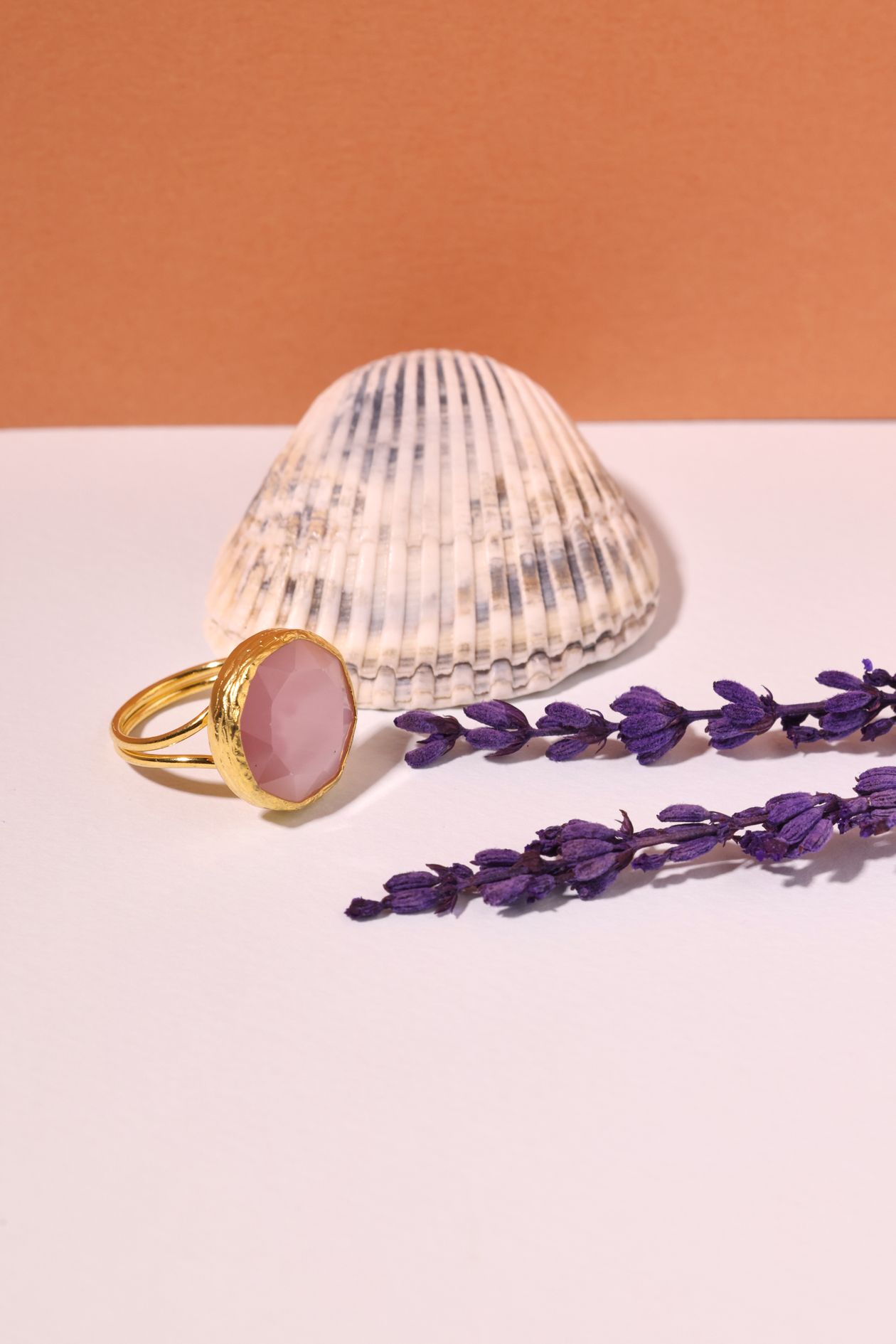
Is rose quartz a good choice for an engagement ring? Symbolically, yes — it is the stone most associated with gentle, unconditional love. Practically, it depends on how you wear it: Rose quartz has a Mohs hardness of 7, which means it scratches more easily than the sapphire (9) or diamond (10) most engagement rings use Sapphire has a Mohs hardness of 9 Diamond has a Mohs hardness of 10. In a protective setting, with realistic care, it works. As a daily-wear workhorse with no compromises, a harder stone is the safer buy.
What Does a Rose Quartz Engagement Ring Symbolize?
In contemporary jewelry culture, rose quartz is called the “stone of love” and associated with unconditional love, tenderness, compassion, and emotional openness GIA describes rose quartz as known as the “love stone,” said to balance the emotions and to heal anger and disappointment. That modern association is real and widely shared — but it is modern. It should not be confused with documented history, and documented history should not be confused with legend. All three exist for this stone, and they are different things.
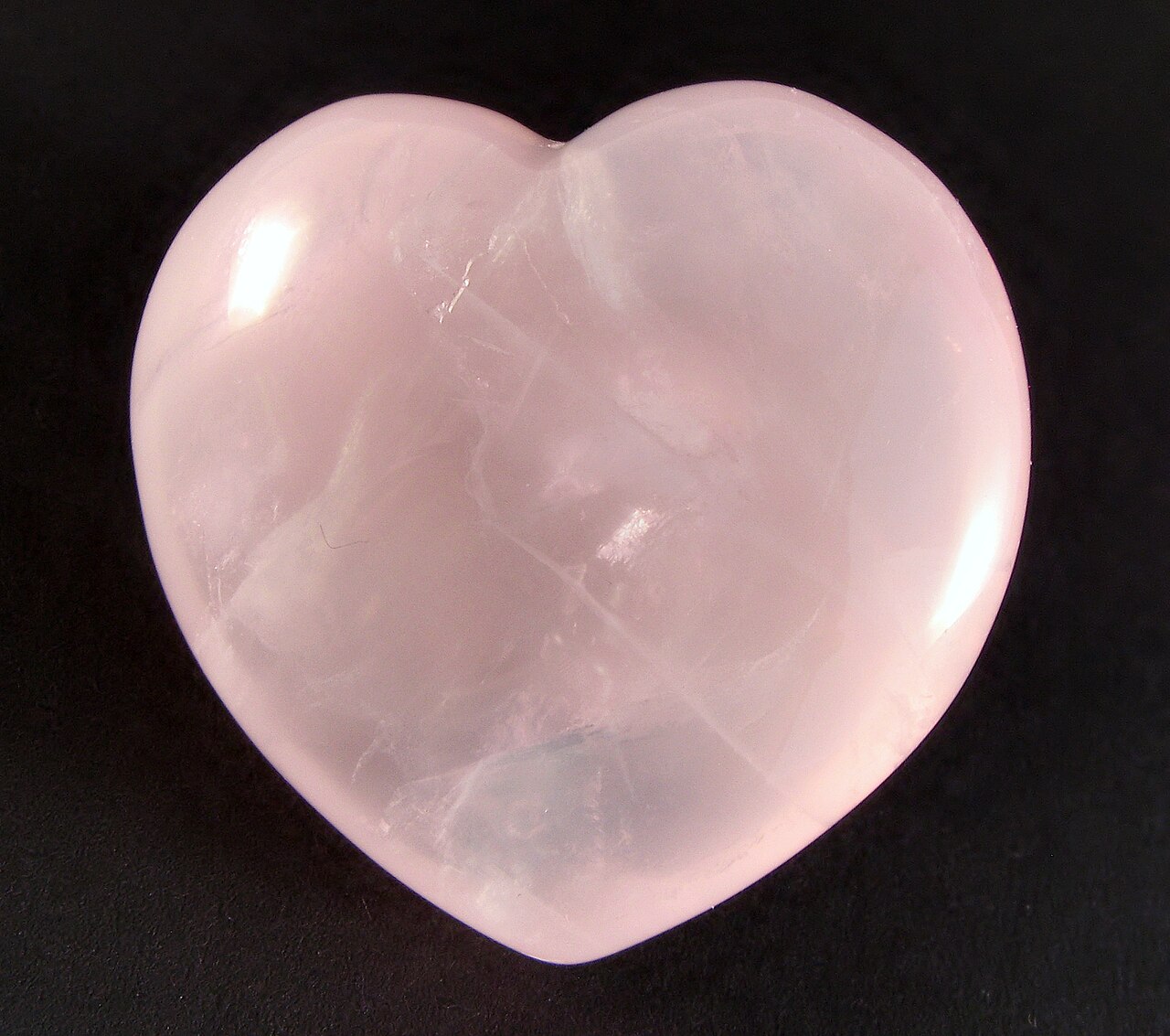

The documented history is genuinely old: Rose quartz beads dating back to 7000 BC have been found in the area once known as Mesopotamia, rose quartz jewelry was known to have been crafted by the Assyrians around 800-600 BC, Romans used rose quartz as seals to signify ownership, and ancient Egyptians believed quartz had powers to prevent aging. Those are records of use and belief — not records of engagement rings, which did not exist in these cultures in any modern sense.
The romantic legends — a goddess’s blood staining white quartz pink, and similar stories — are legends, not documented history. They are part of the stone’s folklore charm, but no ancient source establishes them, and repeating them as fact would be dishonest. The honest version: people have valued this pink stone for over 9,000 years, and the “unconditional love” meaning attached to the stone today is best read as the current chapter of that long story — when the love association itself began, the sources do not establish.
Rose Quartz vs. Pink Quartz: A Distinction Worth Knowing
In shops, “pink quartz” and “rose quartz” are often used interchangeably, and for most jewelry buyers the difference does not matter. Mineralogically, though, they are distinct materials, and the distinction matters for two practical questions: why the stone is pink, and whether the color lasts.
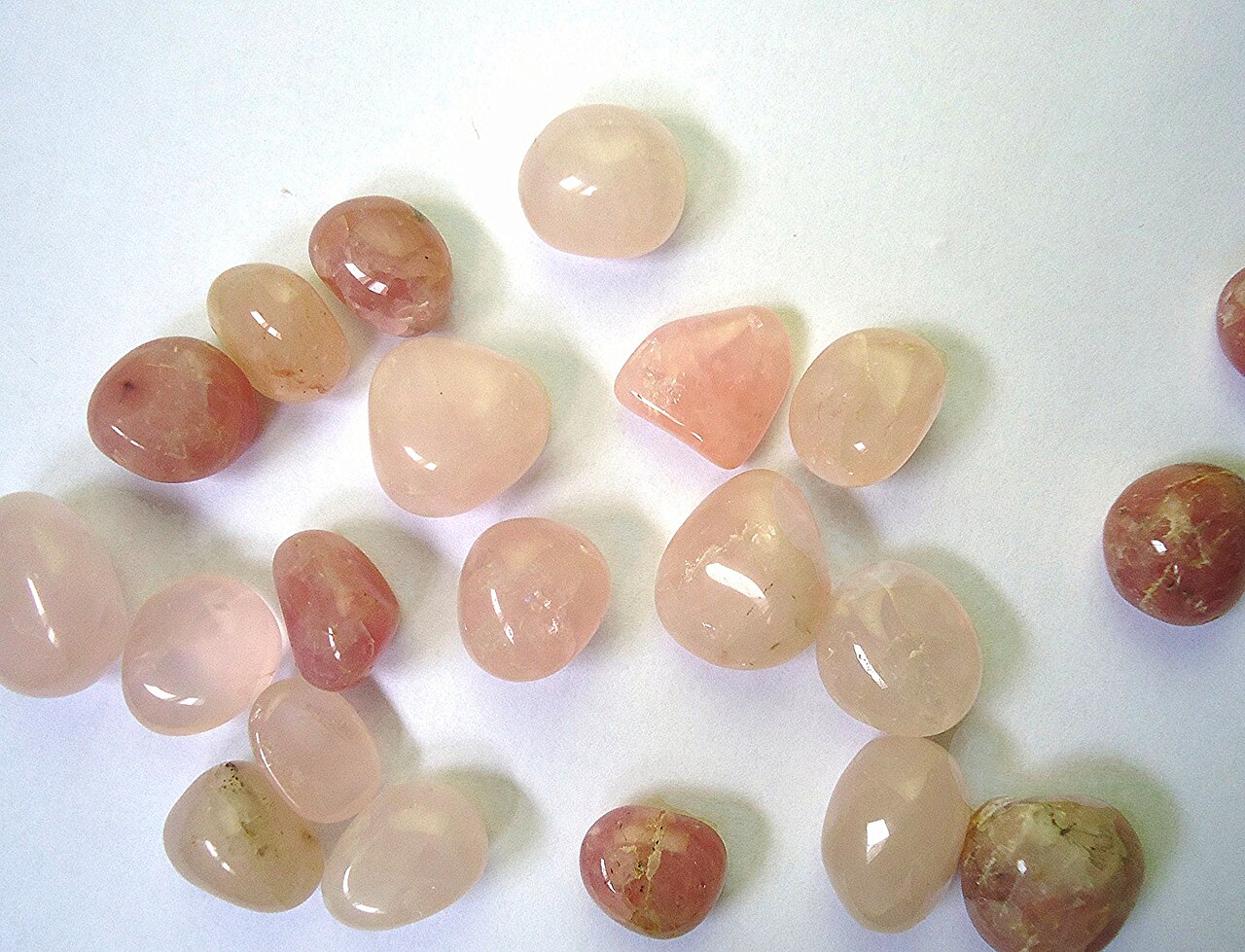

Ordinary rose quartz — the material in virtually all rose quartz jewelry — is always found in massive form, lacking regular flat crystal faces. Research has shown it owes its pink color to microscopic inclusions of aligned silicate mineral fibers, generally similar but not identical to the mineral dumortierite. Those inclusions also give it the characteristic cloudy translucence microscopic mineral inclusions give rose quartz a cloudy translucence.
Crystalline “pink quartz” is a different, much rarer material: transparent, well-formed crystals whose color comes from irradiation-induced color centers in the quartz lattice, not from inclusions crystalline pink quartz is rare and its color fades slowly with prolonged exposure to sunlight, while massive rose quartz color is stable. Because the two materials color differently, they behave differently in light — which brings us to the fading question.
Is Rose Quartz Durable Enough for Daily Wear?
Start with the numbers. Rose quartz has a Mohs hardness of 7, sapphire 9, diamond 10. Hardness 7 means rose quartz resists scratches from most everyday contacts — it is harder than window glass (about 5.5) — but anything harder than 7 can scratch it, and household dust commonly contains quartz particles that can abrade a quartz surface over time. Abrasion is a conditional, long-term risk that depends on exposure, pressure, and setting — not a predictable deterioration schedule.
| Rose quartz | Sapphire | Diamond | |
|---|---|---|---|
| Mohs hardness | 7 Rose quartz Mohs hardness 7 | 9 Sapphire Mohs hardness 9 | 10 Diamond Mohs hardness 10 |
| Typical cut for jewelry | Cabochon or carved (translucent material) translucent rose quartz is cabochon-cut or carved | Faceted | Faceted |
| Daily-wear risk | Scratches and dulling with rough treatment; vulnerable edges | Very resistant | Most resistant |
There is one piece of good structural news: quartz has no cleavage planes and instead shows conchoidal fracture, unlike topaz or diamond which have perfect cleavage, so it does not have built-in directions along which it splits easily. Knocks can still chip it — especially at thin edges — but the material itself is not fragile along a plane.
The practical translation: a rose quartz engagement ring is fine for someone who will take it off for housework, sports, and gardening, and who accepts that after years of daily wear it may need repolishing. It is not the right stone for someone who wants to never think about the ring again.
Will the Color Fade?
For the rose quartz in your ring — ordinary massive material — the color is stable; it is the rare crystalline pink quartz whose color fades slowly with prolonged sunlight exposure. Normal indoor and outdoor wear is not a fading risk for standard rose quartz jewelry. Most of the fading warnings you see online come from conflating the two materials described above; treated stones are a separate case, and not every fading report is settled science. Buy the stone for its color with confidence; the care priority is scratches and knocks, not sunlight.
Choosing a Setting: What Actually Protects the Stone
Setting choice matters more for rose quartz than for sapphire or diamond, because the stone needs the help. Two principles do most of the work:
Surround the vulnerable edges. A bezel setting — a metal rim that encircles the stone — covers the girdle edge, which is where chips start. Prong settings show more of the stone and let in more light, but leave edges exposed. For a soft stone worn daily, protection beats display.
Keep the profile low. A stone that sits high catches on things; a lower setting takes fewer side impacts. When comparing mountings, look at how far the stone rises above the band and how the gallery is built, not just at the style name.
A halo of small diamonds or sapphires changes the look and adds sparkle, but do not assume surrounding harder stones shield the center from impacts — protection comes from the mounting’s geometry (height, spacing, how the center stone is seated), and a halo adds more small stones and settings that themselves need maintenance. Ask the jeweler how the center stone is seated and where it is exposed, rather than treating any style name as a guarantee.
On prong counts and inspection schedules: there is no universal rule. The right number of prongs depends on the stone’s size, shape, and whether it is a cabochon or faceted cut; have a jeweler check the mounting periodically, with frequency matched to how hard you wear the ring.
How to Spot Fakes and Treatments
Any gem can be imitated, and rose quartz is no exception any gem can be imitated, sometimes by manmade or natural materials chosen to impersonate a particular gem. The common lookalikes:
- Glass: often too perfect — very clear, sometimes with round bubbles. Rose quartz owes its cloudy translucence to microscopic mineral inclusions, so a suspiciously flawless, glassy “rose quartz” deserves a second look.
- Dyed quartz or dyed agate: natural quartz or agate dyed pink. A tell is color concentrating unnaturally in surface-reaching cracks or fractures. Ask the seller directly whether the stone has been dyed or otherwise treated, and get the answer in writing.
Two measurements jewelers use — refractive index 1.544 to 1.553 and specific gravity 2.66 — are consistent with quartz and help separate it from glass, but the two figures alone are not conclusive identification; gemologists confirm with additional observations, including optical character. Their limit: dyed quartz is still quartz, so these tests cannot confirm natural pink color or reveal treatments. They help answer “is it quartz?” — not “is it untreated natural-color rose quartz?”
Lab reports: an independent gemological identification report can confirm the material and detect some treatments. Before paying for one, ask exactly what the report covers — identification is not the same as a quality grade, a durability guarantee, or a valuation. An independent lab’s findings and a seller’s own description are different documents; know which one you are reading.
Caring for a Rose Quartz Ring
- Water: brief contact with plain water is fine; avoid long soaks and harsh chemicals.
- Cleaning: warm water, mild soap, soft brush; dry thoroughly. Skip ultrasonic and steam cleaners: GIA advises avoiding both for rose quartz — warm, soapy water is the safe cleaning method.
- Storage: store separately from harder jewelry so it is not scratched in the box.
- Activities: remove for housework, sports, gardening, and anything involving grit, impact, or chemicals.
A Note on Rose Quartz Bracelets
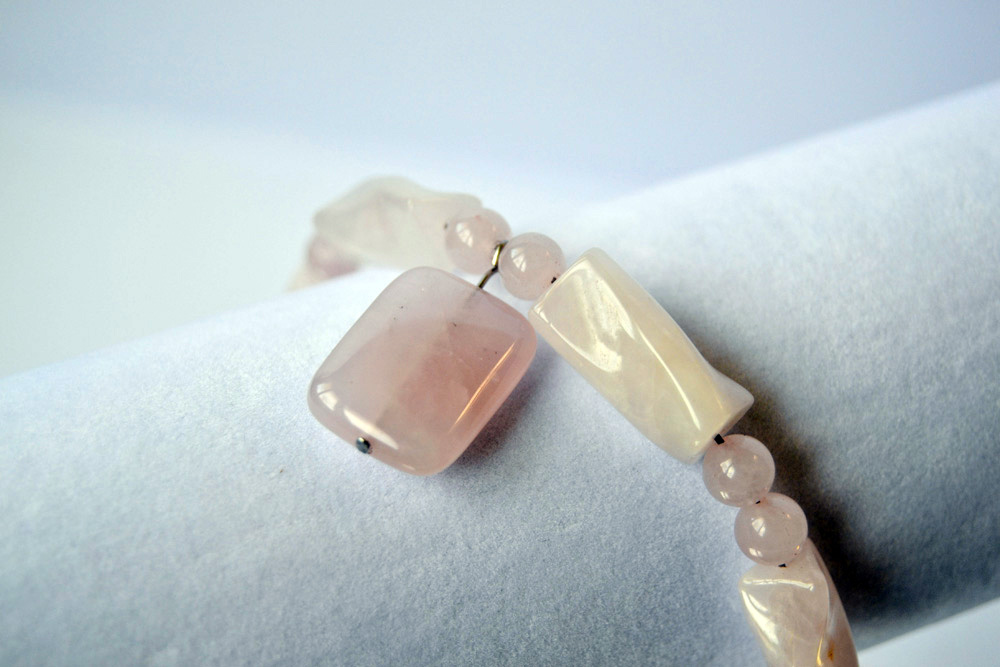
Bracelet beads are the same mineral — rose quartz is a quartz variety with SiO2 composition — and the symbolism and durability sections above apply to them equally. The one practical difference is the format: elastic cord wears with water, sweat, and time, so remove beaded bracelets for swimming and showering, and restring when the cord looks tired.

Who Should — and Shouldn’t — Choose Rose Quartz
Choose rose quartz if the symbolism genuinely moves you and you are willing to give it a protective setting and periodic care. Rose quartz has been recognized as the gem commemorating the fifth wedding anniversary — it also makes a thoughtful anniversary stone for the same reasons.
Choose a harder stone — sapphire or diamond — if the ring will face rough daily treatment or you want to never remove it. There is no wrong answer here; there is only an informed one. The stone’s meaning, as ever, is the one the two of you give it — the geology just sets the terms on which it will keep it.