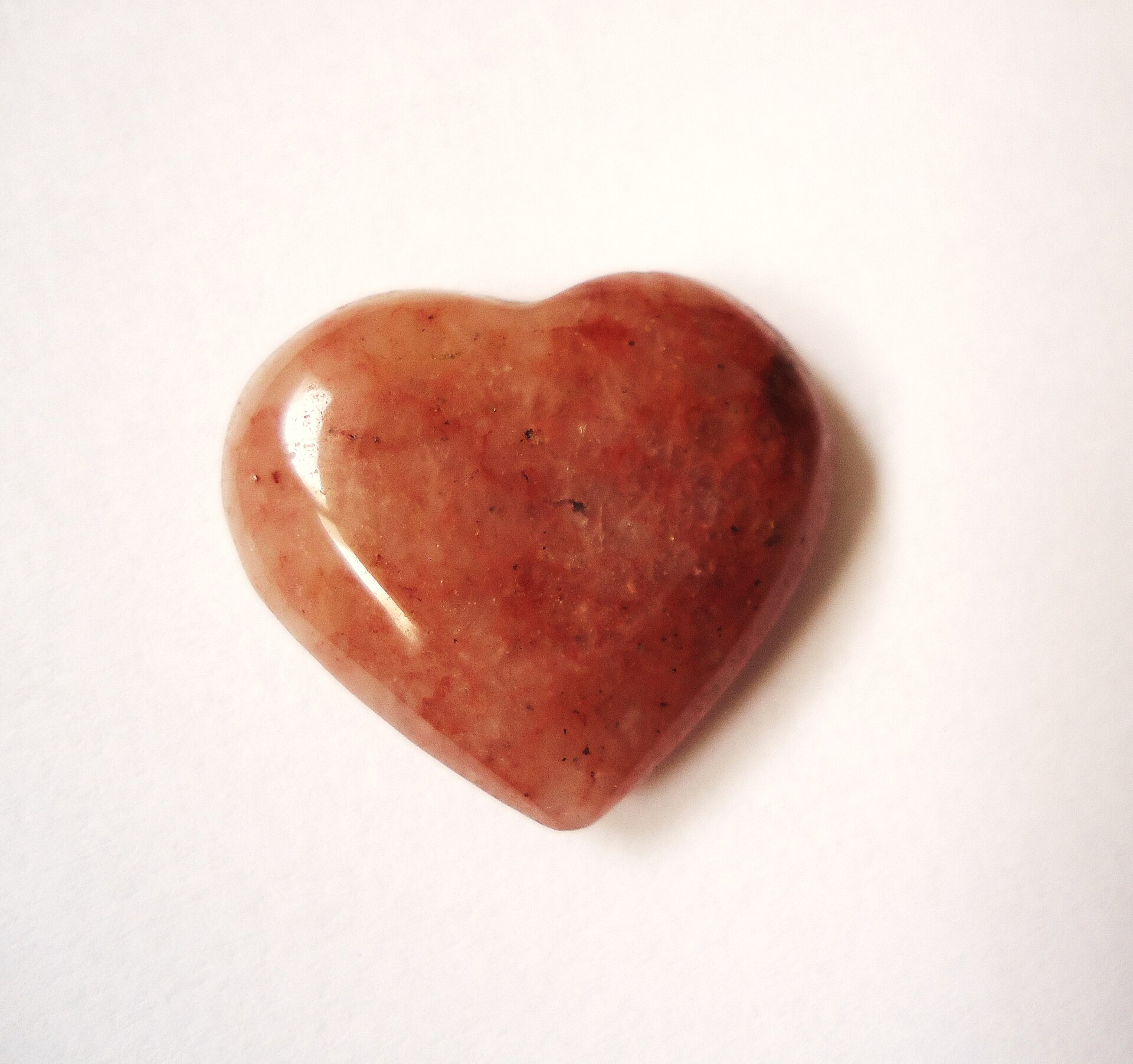
In crystal tradition, pink quartz stands for love, self-love, compassion and emotional comfort. People reach for it when they want a reminder to be gentle with themselves and with others. It is linked with romance, but just as much with kindness, forgiveness and feeling at ease. If you have seen both “pink quartz” and “rose quartz” on labels, you are almost always looking at the same stone. There is also a rarer mineral that specialists call pink quartz, and we explain it below.
In short: In crystal tradition, pink quartz means love in its widest sense: romantic love, self-love, compassion, and emotional comfort during hard times. It is often linked with the heart chakra and used as a reminder of calm and kindness. These are traditional beliefs, not scientific findings. On the name: in shops and everyday speech, “pink quartz” and “rose quartz” usually mean the same material. Mineral references also describe a separate, much rarer crystalline pink quartz — the meanings you will see attached to rose quartz online are the ones that apply to the stone most people actually own.
What does pink quartz mean?
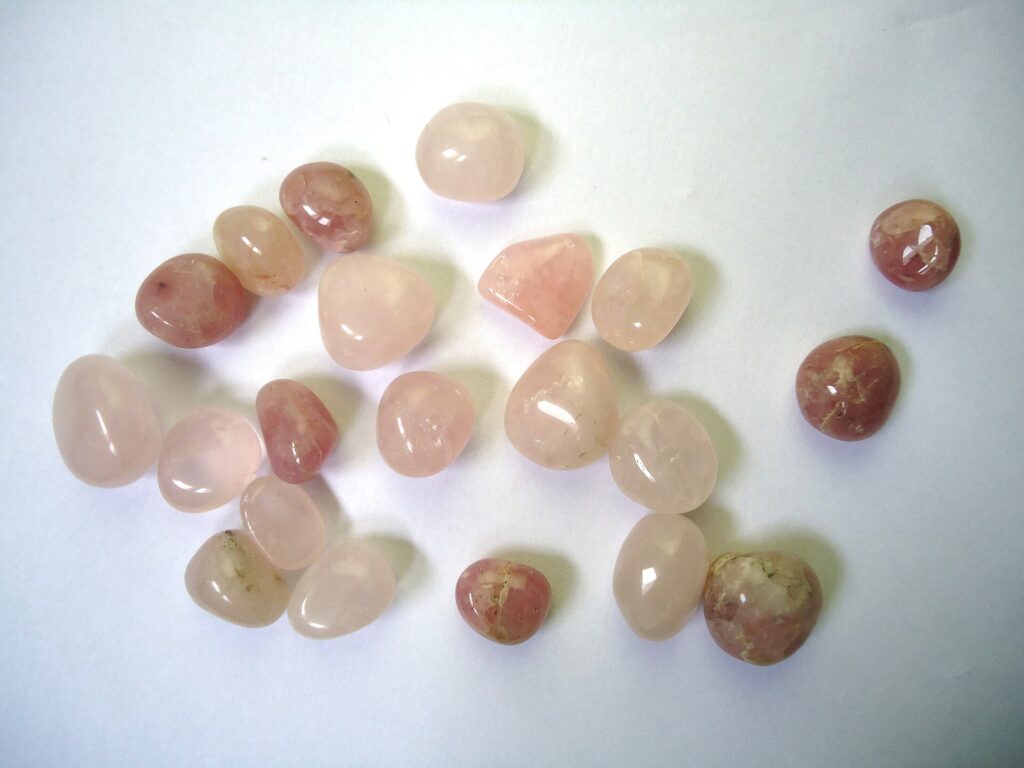
In traditional crystal practice, pink quartz is said to attract love, help mend strained relationships, and encourage self-love. Those are the claims the tradition itself makes. None of them has scientific support, and this page does not present them as effects the stone produces. What follows is the symbolism people attach to pink quartz, and the reasons they give for valuing it.
Love and romance
Pink quartz is best known as a stone of love. In crystal tradition it represents tenderness, affection and the wish for a loving relationship, and its soft colour has made it a natural emblem of romance. Some people keep a piece nearby when they are hoping to meet someone. Couples sometimes exchange it as a small sign of commitment — less formal than jewellery, more lasting than flowers.
Self-love
For many people today, self-love is the centre of the pink quartz meaning. The stone stands for treating yourself with the patience and warmth you would offer a close friend. The point is not self-improvement pressure. It is closer to permission: to rest, to be treated gently, and to start with yourself.
Emotional healing symbolism
Pink quartz is traditionally linked with emotional recovery — getting through heartbreak, grief or a stretch of loneliness. People keep it as a promise to themselves that the hard stretch will pass. It is not a treatment, and it does not replace support from people or professionals.
Compassion, peace, and getting along
Compassion and calm run together in the lore around this stone. It is tied to an open, forgiving attitude: listening more patiently, softening a hard reaction, letting go of an old grievance. In homes, people place it in shared rooms — a living room, a bedroom — as a symbol of quiet goodwill between the people who live there. Here the meaning is less about passion and more about peace.
Heart chakra association
In chakra-based traditions, pink quartz is linked with the heart chakra, the energy centre those systems connect with love and emotional balance. The pairing is symbolic: a pink, love-themed stone matched with the centre the tradition links to love. Chakras are a spiritual concept and not something that can be measured.
Is pink quartz the same as rose quartz?
Short answer: in shops and everyday use, yes. “Pink quartz” is a name buyers often meet for rose quartz. If a jewellery listing, a crystal shop tag or a friend’s gift says “pink quartz,” it almost certainly means the familiar cloudy-to-translucent pink stone sold as rose quartz. In crystal tradition the two names carry the same meaning, because people are usually talking about one material.
Some mineral references, though, draw a distinction the trade mostly does not.
Rose quartz: the massive variety
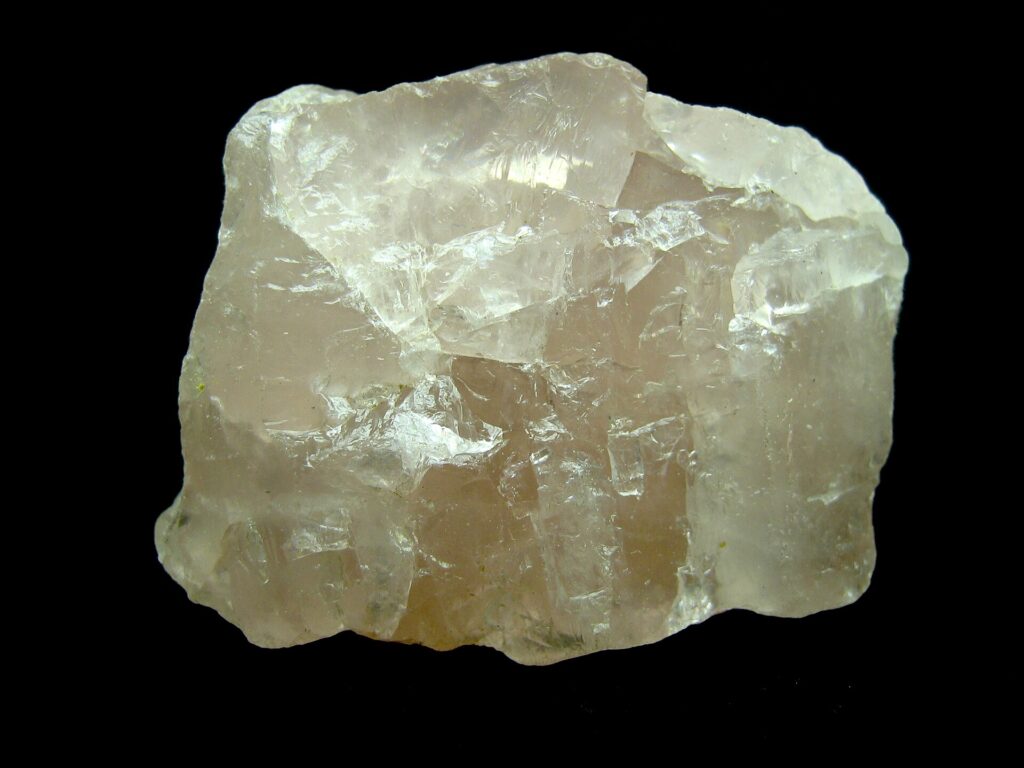
Rose quartz is a pink variety of quartz, according to GIA. GIA also notes that rose quartz is always found in massive form: it grows as a solid mass and does not form the flat-faced, pointed crystals people picture when they hear the word “crystal.” That is why rose quartz is sold as tumbled stones, carved shapes, beads and rough chunks — and why the points and towers on shop shelves have been cut and polished into shape from that massive material.
For the colour, GIA’s current description points to microscopic inclusions: tiny aligned fibres of a silicate mineral, generally similar to — though not identical to — the mineral dumortierite, which crystallised inside the quartz as it cooled. Those fibres also explain why rose quartz usually looks slightly hazy or milky rather than glass-clear. Its pink ranges from very light, almost white, to medium-dark.
True pink quartz: the rare crystalline form
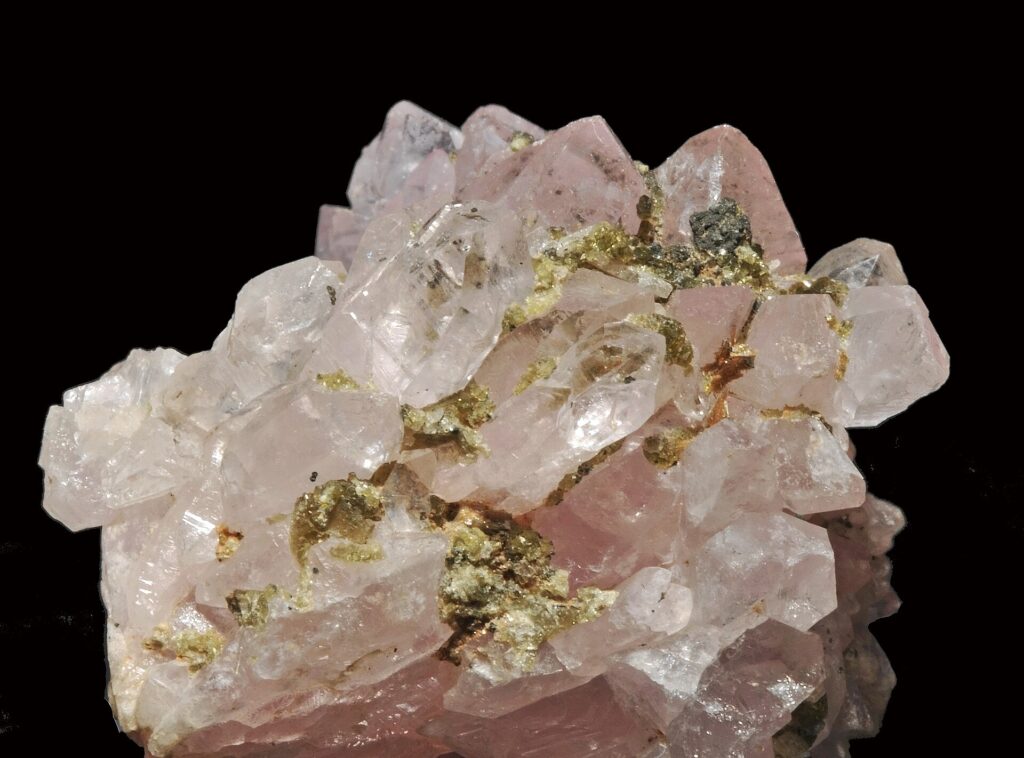
The Quartz Page, a long-running mineral reference, describes a separate and much rarer material also called pink quartz. It is generally accepted there as an independent quartz variety, though the reference itself notes there is some disagreement about whether it should carry a different name — so treat this as a distinction many mineral specialists use, not a naming rule everyone follows.
Unlike rose quartz, true pink quartz forms distinct, well-grown crystals. Its colour has a different cause: colour centres — tiny defects in the crystal structure — related to natural irradiation and involving aluminium and phosphorus built into the lattice. That kind of colour is not fully stable: true pink quartz is very sensitive to light and can pale in strong sunlight.
What this means for you
Most people never need to think about the distinction. If you own a piece of “pink quartz” from a crystal shop or jewellery store, it is rose quartz in the everyday sense, and the traditional meanings apply to it. A pointed shape does not change that: shop points and towers are cut from massive rose quartz, not grown as natural crystals.
True crystalline pink quartz mainly matters to mineral collectors. It is sold as natural crystal clusters, is expensive for a quartz, and needs keeping out of prolonged strong light because its colour can fade.
Pink quartz as a gift: what it says
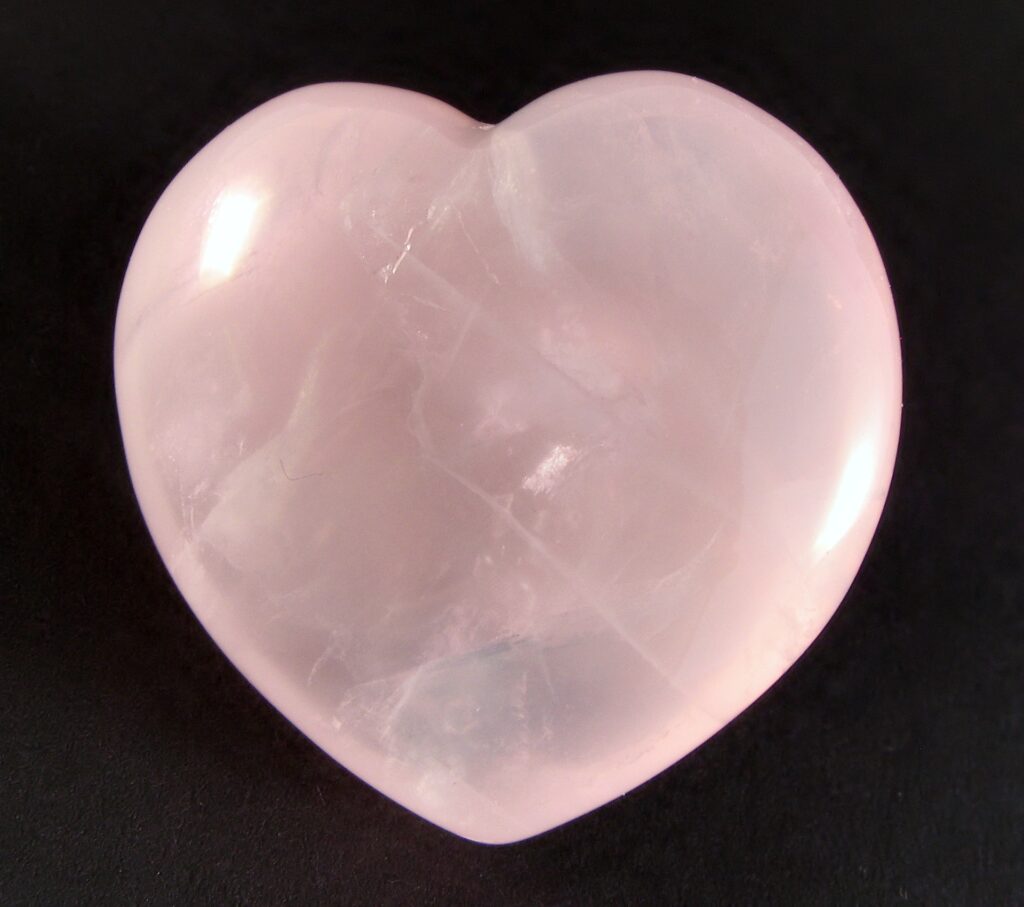
People often give pink quartz because its traditional message is warm and easy to read. A piece given this way is often meant to say: I care about you — and I hope you care about yourself too.
Affection without pressure
Pink quartz is closely linked with romance, but as a gift it doesn’t have to be a declaration. It can simply mean affection — for a sibling, a parent or an old friend. Its gentle colour and soft symbolism make it a safe choice when you want to show warmth without sending a mixed message.
Support through a hard time
Because pink quartz symbolises comfort in crystal tradition, people give it when someone is struggling: after a breakup, a loss or a draining year. Given this way, the stone is not meant to fix anything. It is a small, lasting reminder that someone is thinking of them. A short handwritten note often says more than the stone alone.
Encouraging self-love
Some of the most thoughtful pink quartz gifts are about the person receiving it, not about the giver. Giving pink quartz to someone who is hard on themselves can be a quiet way of saying, “Be kind to yourself.” This is close to the heart of the modern pink quartz meaning.
Good occasions
- A partner. Anniversaries, Valentine’s Day, or simply “because.” For couples thinking about something more permanent, our guide to rose quartz engagement ring meaning looks at what the stone symbolises in a ring.
- A close friend. Birthdays, a new chapter, or a hard season. Pink quartz fits friendship as well as romance.
- Yourself. Plenty of people buy pink quartz for themselves after a difficult period, as a marker of starting over gently. A self-purchase is not a lesser gift. In crystal tradition, it may be the purest expression of what the stone stands for.
How people use pink quartz
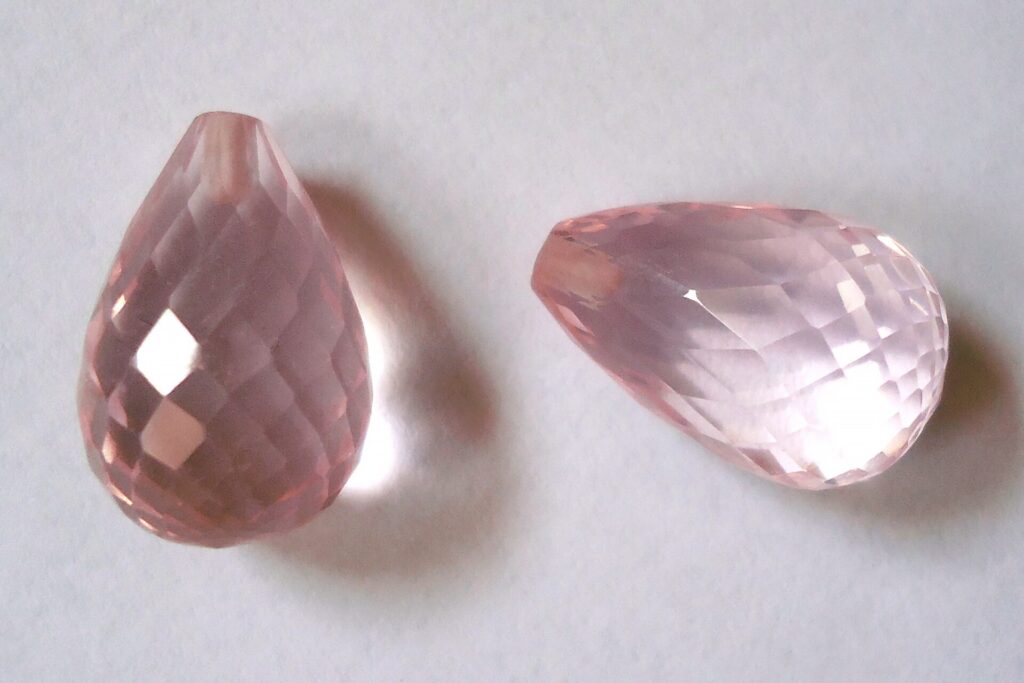
The stone itself has no proven effect on your body or your home. What people value in the uses below is the stone as a focus — for attention, intention, and routine.
Jewellery
Wearing pink quartz is the simplest way to keep its symbolism close. Pendants, bracelets, beaded necklaces and rings are all common. Some people wear a pendant near the heart because of the stone’s traditional heart chakra link. Others simply like a small, visible reminder of self-kindness during the day. Its soft colour also goes with most metals and skin tones.
Bedside and home
Many people keep a piece of pink quartz on a bedside table, often as part of an evening routine: picking it up before sleep as a cue to let go of the day’s tension, or to think of someone with affection. In shared rooms it is placed as a symbol of harmony; in a bedroom, of love and closeness.
Meditation reminder
In meditation, people often hold pink quartz or place it in front of them as a focus point. The feel of the stone in the hand can help bring attention back when the mind wanders. Some pair it with a short phrase, such as “I am allowed to rest” or “May I be kind.” Here the stone works the way a candle or a string of beads does: as a tool for attention.
Rituals of care
Some crystal practitioners like to “cleanse” or “charge” their stones from time to time, using moonlight, sound or simple intention. These are spiritual practices, not physical processes. If this is part of your routine, our guide on how to charge rose quartz covers traditional methods and the care each one needs. Whatever ritual you choose, keep any stone out of long, strong sunlight as a general care habit — and be especially careful with the rarer crystalline pink quartz, whose colour can fade under strong light.
Buying notes
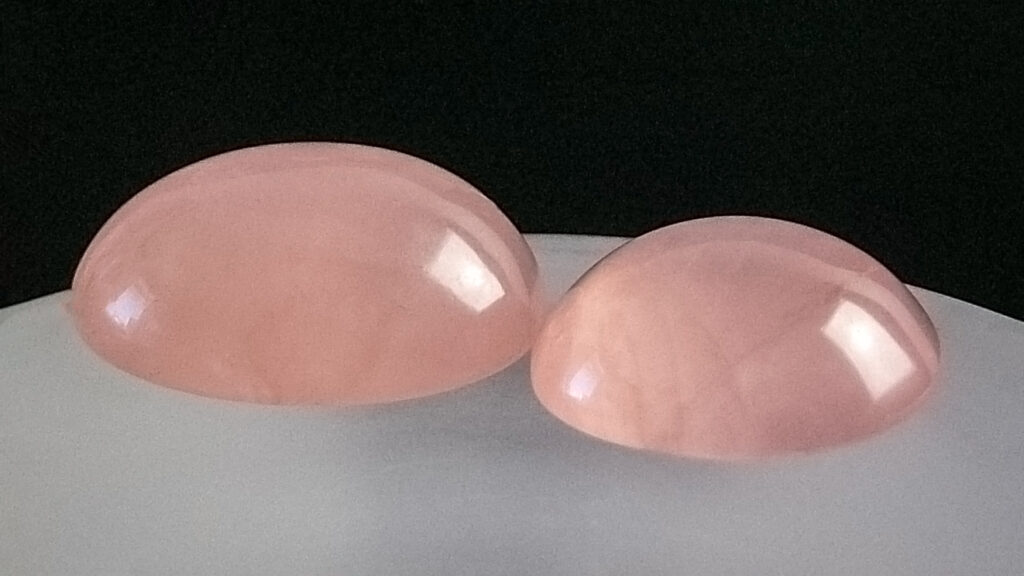
A few practical points make buying pink quartz easier. They apply whether the label says “pink quartz” or “rose quartz.”
Both names usually mean the same stone
As covered above, the two names are used interchangeably in shops for massive rose quartz, so you don’t need to choose between them on meaning or quality. The rare crystalline pink quartz lives among collector specimens, not in everyday jewellery or tumbled stones.
Colour depth varies
Rose quartz ranges from very pale, almost white pink to a deeper, more saturated rose, and neither shade is “better” in crystal tradition. Choose the one you like. Clarity varies too; a slight haze is normal for this material.
Durability for everyday wear
Quartz has a hardness of 7 on the Mohs scale (GIA), which makes rose quartz hard enough for everyday jewellery such as pendants, earrings and bracelets. It still makes sense to store pieces apart from harder gems, which can scratch them. Rings take more knocks than other jewellery, so a protective setting is worth thinking about.
Spotting imitations: general advice
Pink glass and dyed or treated stones are sometimes sold as pink quartz. A few general habits help:
- Buy from sellers who describe materials clearly, including any treatments, and who answer questions directly.
- Don’t judge by colour evenness. Natural rose quartz can be evenly coloured — even colour is often a quality plus, not a warning sign. Colour alone cannot authenticate a stone.
- Be wary of very low prices for large, flawless-looking pieces.
- For valuable pieces, ask a qualified gemmologist to confirm what you have. A trained professional with proper instruments is the reliable route.
The meaning, in one line
Pink quartz means love handled gently: love for a partner, love for friends and family, and — at the centre of its modern meaning — love and patience for yourself. Whatever name is on the label, that is the message people keep choosing it for.
Sources
- GIA, “Rose Quartz Description” — gia.edu/rose-quartz-description (rose quartz as a pink quartz variety; always massive; colour from dumortierite-like fibre inclusions; pink crystalline quartz rarity; Mohs hardness of quartz).
- The Quartz Page, “Pink Quartz” — quartzpage.de/pink.html (pink quartz as an independent variety; crystal form; aluminium/phosphorus colour centres from irradiation; light sensitivity).