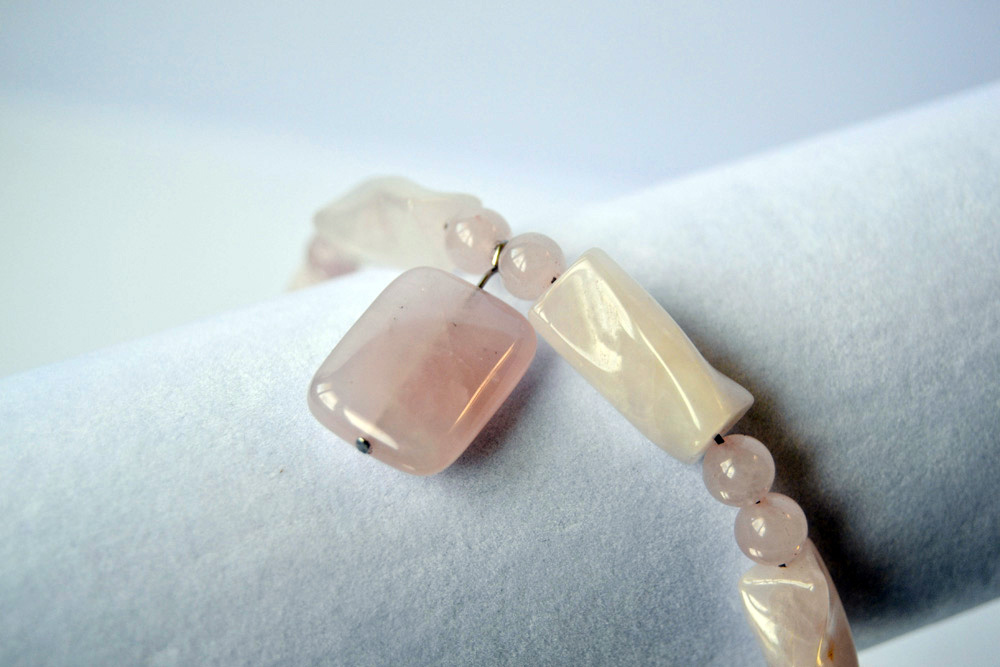
In crystal tradition, a pink quartz bracelet stands for love, self-love, compassion and emotional comfort. People who wear one usually treat it as a small daily reminder to be gentle with themselves and with others. Because it sits on the wrist, it’s in view many times a day: while you type, cook, reach for a cup or check the time. These meanings come from belief and personal ritual, not from science. A bracelet doesn’t change your feelings by itself. What many wearers value is the intention they attach to it.
What does a pink quartz bracelet mean?
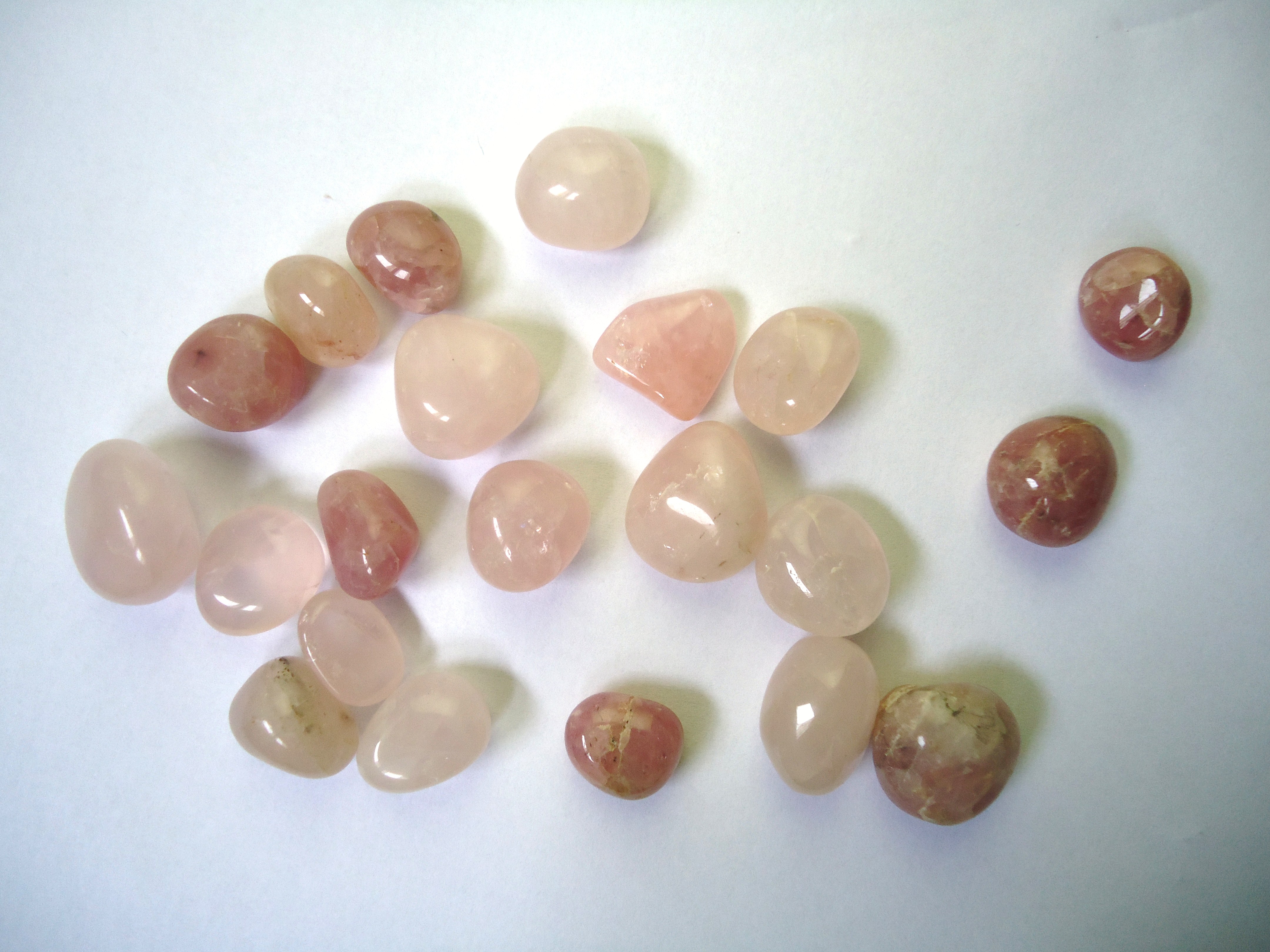
Most of the meaning of a pink quartz bracelet comes from the stone’s long link with love in crystal practice. The bracelet form adds closeness and repetition. Below are the meanings people most often give it, each one a tradition rather than a fact.
A reminder of self-love. In crystal-practice traditions, pink quartz is closely tied to self-love. Many wearers say the bracelet works as a cue to talk to themselves more kindly, rest when they need to, or stop holding themselves to impossible standards. The bracelet holds no power here. It’s a cue, a bit like tying a string around your finger.
An intention for love and relationships. Pink quartz is traditionally associated with romantic love and healthy, caring relationships. Some people wear the bracelet while they hope for a new relationship. Others wear it to honour a relationship they already have. In both cases it marks an intention to give and receive love openly.
Emotional comfort. Some wearers reach for a pink quartz bracelet during hard seasons such as a breakup, a loss, a move or a stressful stretch at work. In crystal tradition the stone stands for softness and reassurance. Turning a smooth bead between your fingers can become a small grounding habit. The bracelet is not a treatment for anxiety, grief or any other condition. Its role is symbolic and personal, and it is no substitute for professional support.
Compassion and kindness. Beyond romance, pink quartz is linked in crystal practice with compassion: patience with other people, forgiveness, and choosing kindness when frustration would be easier. A bracelet you see during a tense conversation can be a nudge to soften your tone.
Friendship. Because its symbolism centres on care rather than only romance, pink quartz is a popular stone between friends. Matching bracelets, or one given to a friend going through a difficult time, are traditionally read as a sign of loyalty and affection.
A quick note on names: the stone most shops sell as a “pink quartz bracelet” is almost always rose quartz. The difference between the two names is explained in our guide to pink quartz meaning.
Which wrist should you wear a pink quartz bracelet on?
Some contemporary crystal practices describe the left wrist as the “receiving” side and the right wrist as the “giving” or “expressing” side.
Under this belief:
- Left wrist: worn to invite or receive love, comfort and self-compassion.
- Right wrist: worn to express or give love, kindness and compassion to others.
This is a traditional belief with no scientific basis. It is not a rule, and you won’t be “wearing it wrong” whichever wrist you pick. The idea also differs between traditions, and some practitioners reverse the sides entirely.
In practice, many people just wear their pink quartz bracelet wherever it feels comfortable. Often that’s the non-dominant wrist, where it’s less likely to knock against desks, doors and countertops. If the left/right idea speaks to you, use it as part of your own ritual. If it doesn’t, comfort and practicality are perfectly good reasons to choose.
What does it mean when someone gives you a pink quartz bracelet?
A pink quartz bracelet is a popular crystal gift, and its traditional reading is warm and simple. In crystal tradition, the gift is read as:
- “You are loved.” In crystal tradition this is the best-known reading: a sign of care from the giver.
- Care and support. It’s often given during a hard time as a gentle way of saying “I’m thinking of you.”
- Encouragement to love yourself. Some givers mean it as a nudge to treat yourself with the same kindness you show other people.
The gift is not necessarily romantic. Pink quartz’s association with love covers all kinds of love: friendship, family and self-love as well as romance.
Common occasions include:
- From a partner: often a symbol of affection or commitment, given on anniversaries, Valentine’s Day or just because.
- From a close friend: a sign of loyalty and support, especially around big life changes, recovery from a breakup, or birthdays.
- To yourself: buying a pink quartz bracelet for yourself is very common. Many people treat it as a deliberate act of self-care and a personal commitment to self-love.
If someone gives you one, a traditional reading is that they care about you — but the real meaning depends on the giver and your relationship. Some people choose it for the symbolism; others simply liked the colour or knew you like pink stones. When in doubt, the giver’s own words matter more than any tradition.
Bracelet vs other rose quartz jewellery

What sets a bracelet apart is how often you notice it: a pendant often sits under clothing, while a bracelet moves with your hands and catches your eye through the day — which is why wearers often choose it as an everyday anchor for an intention.
Symbolism also shifts with context. An engagement ring usually centres on commitment between two people (we cover that angle in our guide to rose quartz engagement ring meaning); a bracelet is more often a personal piece, though it can certainly mark a shared promise too. The form suggests; it doesn’t dictate.
Buying a pink quartz bracelet: what to check
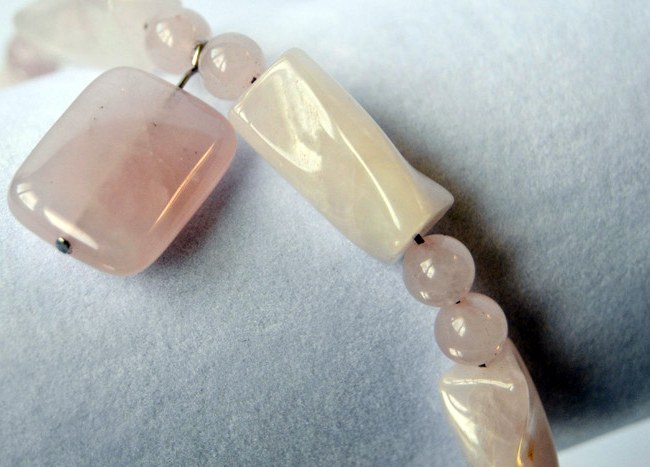
Sizing. Measure your wrist with a soft tape measure, or wrap a strip of paper around it and measure that against a ruler. Add roughly 1–2 cm over your snug wrist measurement for a comfortable fit — less for a snug fit, more for a loose drape. Elastic styles need enough slack to roll over the hand; adjustable clasps let you fine-tune. Beaded bracelets usually come in two styles:
- Elastic (stretch): slips over the hand, easy to wear, but the cord can loosen or wear over time.
- Adjustable (sliding knot or clasp): fits a wider range of wrist sizes and is easier to fine-tune.
Colour variation is normal. Rose quartz colour ranges from very light pink, almost white, to medium-dark pink (GIA). Rose quartz usually has a cloudy, translucent look caused by microscopic mineral inclusions (GIA). Slight differences in shade and haziness between beads are typical of natural material.
Durability. Rose quartz has a hardness of 7 on the Mohs scale (GIA). That makes it hard enough for everyday bracelet wear, though beads can still chip if they hit harder surfaces such as stone countertops or other gemstones.
Spotting fakes. Keep your expectations realistic here:
- Treat flawlessly identical, glassy, candy-bright beads at a suspiciously low price as a weak warning signal only. Glass and dyed quartz are known substitutes, but appearance alone cannot distinguish them from natural stone.
- Even colour on its own is not proof of a fake. rose quartz is often fairly evenly coloured (The Quartz Page).
- Colour also can’t prove a stone is real. Rose quartz is occasionally treated with radiation to intensify its colour (GIA).
Colour alone can’t confirm what a stone is. If authenticity matters to you, buy from a seller who clearly states what the material is and whether it has been treated. For high-value pieces, a gemmological lab can identify it properly.
How to care for it
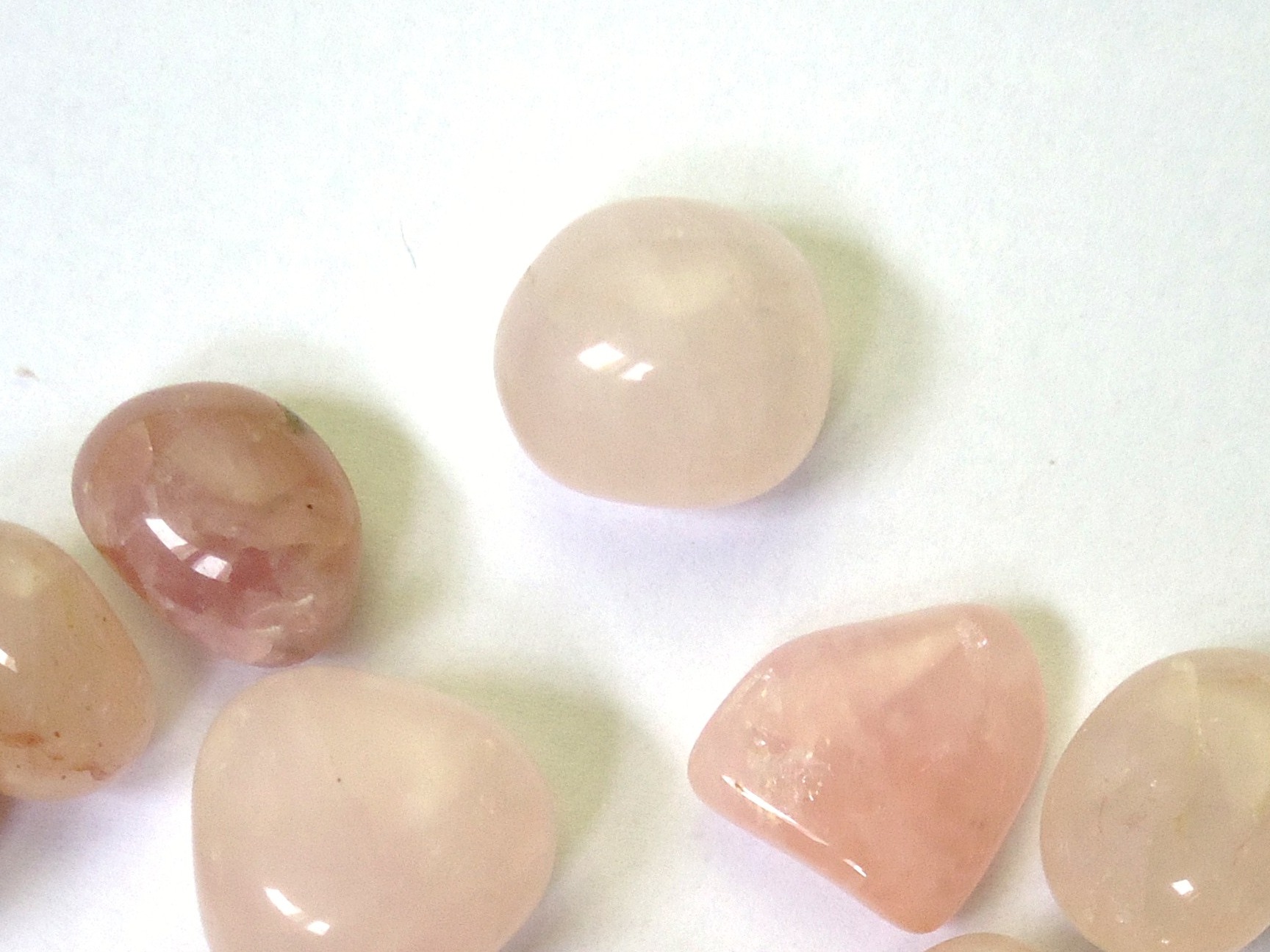
Quartz is a practical stone to look after.
Water. Brief contact with water is fine for quartz. Warm, soapy water is a safe way to clean rose quartz (GIA). Avoid ultrasonic and steam cleaners (GIA). On a stretch bracelet, the cord is usually more fragile than the stone, so rinse quickly, pat dry and let it air-dry flat rather than soaking it.
Sunlight. Rose quartz is generally stable when exposed to light and heat (GIA), so an ordinary bracelet needs no special sun protection. The light-sensitive kind is the rare crystalline pink quartz (The Quartz Page) — not what bracelet beads are normally cut from. Unless a lab has identified your piece as that variety, all-day windowsill “sun charging” is a ritual choice, not a material risk.
Storage. Keep the bracelet apart from harder gemstones and metal jewellery so the beads don’t get scratched. Take it off before heavy lifting, gardening or cleaning with harsh chemicals.
For crystal-practice rituals, see our guides on how to cleanse rose quartz and how to charge rose quartz. Both cover gentle methods that suit a bracelet.
Sources
- GIA, “Rose Quartz”: https://www.gia.edu/rose-quartz
- GIA, “Rose Quartz Care and Cleaning”: https://www.gia.edu/rose-quartz-care-cleaning
- The Quartz Page, “Pink Quartz”: https://www.quartzpage.de/pink.html
- The Quartz Page, “Rose Quartz”: https://www.quartzpage.de/rose.html