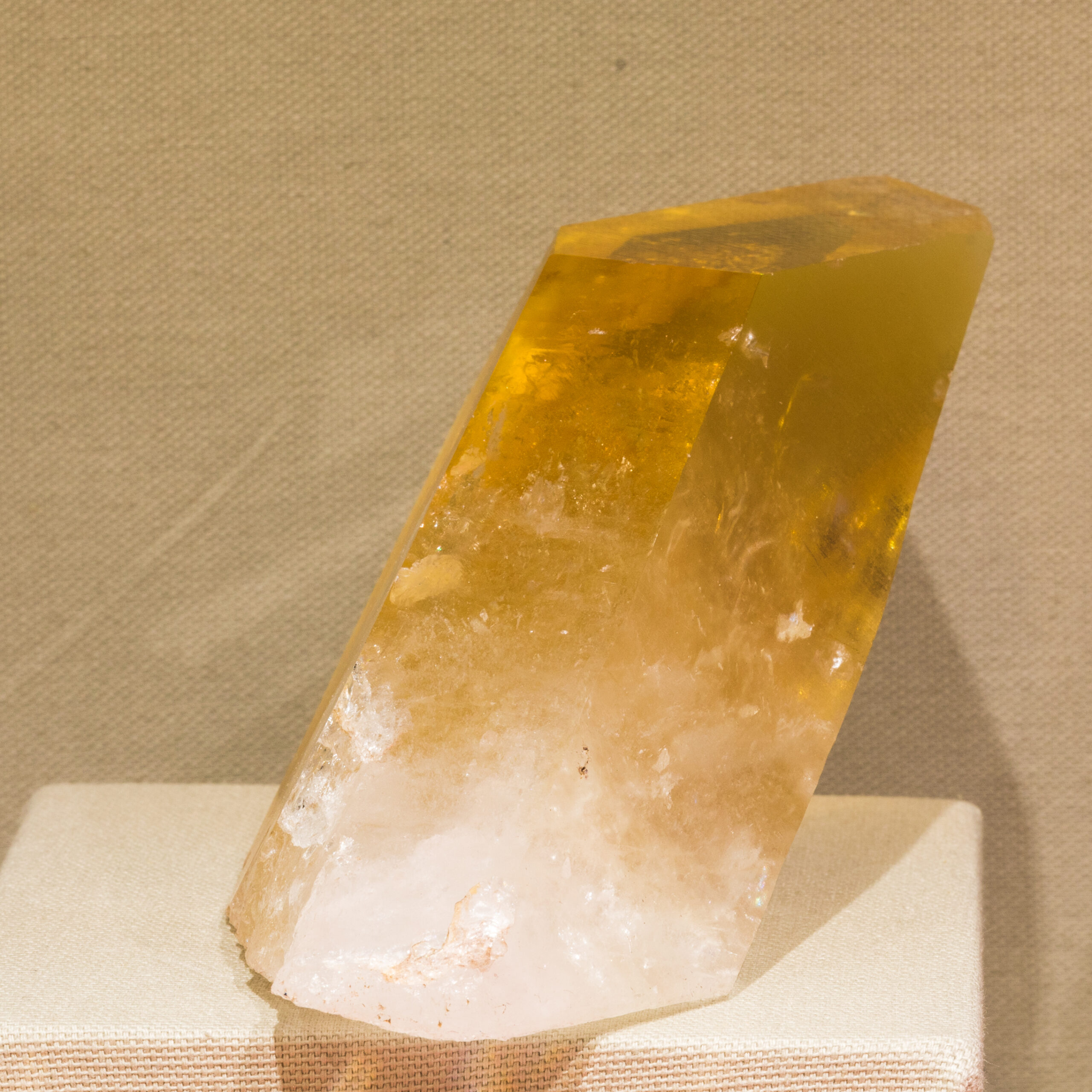
If November birthstones have ever looked contradictory, Citrine is the reason the contradiction is useful: Citrine and Topaz both belong to November, but they are not the same gemstone.
Citrine is yellow-to-brownish-orange quartz. It is also widely used today as a symbol of abundance, joy, optimism and forward movement. The month, the mineral and the symbolism all belong to Citrine’s story—but none of them has to prove the others.
That becomes especially important once another fact enters the picture: natural Citrine is rare, and most Citrine in today’s market is produced by heat treating Amethyst.
The result is not a broken birthstone story. It is a more interesting one.
Two November stones, two different gems
A November birthday can point to either Citrine or Topaz. Current gemological birthstone guides list both.
Their histories overlap because Citrine and Topaz were once mistaken for one another. GIA notes that the confusion extended to belief: people thought Citrine could carry some of the same powers they attributed to Topaz.
That is historical belief, not mineral behavior. Citrine is quartz; Topaz is a different gemstone.
The old confusion is still useful because it shows how gemstone meaning can travel through names, colors and traditions. A birthstone is a cultural marker. It does not need to be the month’s only mineral in order to be meaningful.
For someone born in November, Citrine can therefore be a birthday stone without competing with Topaz for a single “correct” place.
Heat treatment changes the color story, not the calendar tradition
Natural Citrine is rare. Most market Citrine is produced by heating Amethyst, another member of the quartz family.
That fact often triggers a “real or fake?” argument that is less useful than the treatment information itself. A specimen’s treatment history tells you how its visible color developed. November birthstone tradition tells you how people use Citrine culturally. They answer different questions.
So heat treatment does not need to become a purity test for the birthstone meaning. At the same time, appearance alone should not be used to declare a particular piece natural or treated. The real Citrine specimen on this page is a reference for what the stone can look like, not a treatment detector.
What Citrine can mean for a November birthday
Citrine’s warm color makes its modern symbolism easy to understand. Yellow and orange can suggest sunlight, warmth, harvest and something coming into fullness, which helps explain why current crystal culture commonly connects Citrine with abundance, joy, optimism and confidence.
Those are symbolic associations, not guaranteed effects.
A November birthstone cannot promise money, health, confidence or a particular energetic result. What it can do is give a person a concrete object for a chosen idea: a birthday marker, a reminder to notice what is already working, or a prompt to give a new goal some attention.
That distinction also makes the popular phrase “merchant’s stone” easier to handle. The label is common on modern crystal pages, but the authoritative gem-history sources reviewed for Serenlith do not establish it as an ancient Citrine tradition. That absence is not proof that the phrase has no earlier history; it simply is not a reason to turn a modern prosperity label into an ancient fact.
The golden symbolism survives the boundary. It just stops pretending to be a mechanism.
A quick way to read Citrine claims
| Layer | What the evidence supports | Keep the boundary |
|---|---|---|
| Gem fact | Citrine is yellow-to-brownish-orange quartz; natural Citrine is rare; much market material is heat-treated Amethyst | Color and treatment do not create prosperity or healing effects |
| November tradition | Citrine is a November birthstone alongside Topaz; the gems have a history of mistaken identity | Birthstone status does not make Citrine and Topaz the same gemstone |
| Modern symbolism | Abundance, joy, optimism, confidence and forward movement are common contemporary associations | A symbol is not a guaranteed financial, medical or energetic outcome |
The table is the whole rule: fact, tradition and symbolism can live together as long as they keep their own jobs.
How to care for Citrine
For ordinary care, Citrine does not need a complicated ritual.
GIA rates Citrine at 7 on the Mohs hardness scale with good toughness and says warm soapy water is safe for cleaning. Steam cleaning is not recommended.
A practical routine is:
- Clean gently with warm soapy water.
- Rinse and dry with a soft cloth.
- Avoid abrupt temperature changes, which can fracture Citrine.
- Avoid prolonged intense light if you want to reduce the risk of color fading.
If Citrine is set in jewelry, remember that the quartz is only one part of the object. Follow whole-piece care instructions when the metal, adhesive or other materials need more caution.
What Citrine can honestly mean to you
If Citrine is your November birthstone, understanding the treatment and Topaz history does not take the meaning away.
It can still mark a birthday, an anniversary, a new beginning or a personal idea of abundance. The stronger version of that symbolism is not “this stone will make something happen.” It is simpler:
let the golden stone hold the reminder; keep the next action in your own hands.
