If you are new to crystals, the hardest part is often not the mineral. It is the list. Search results can turn a first choice into seven stones, twelve “must-haves,” a chakra chart, or a promise for sleep, love, protection, money, or confidence.
You can make the decision smaller.
You do not need the “best” crystal for beginners. Choose one real object you like, understand well enough to care for, and actually want to keep around.
Use four questions:
| Question | What to ask |
|---|---|
| LOOK | Do I genuinely like this color, shape, texture, or crystal habit? |
| PLACE | Will it be a desk specimen, pocket stone, jewelry piece, bedside object, or something else? |
| CARE | What is the exact mineral, and what does the whole object need for safe handling and cleaning? |
| MEANING | Do I want a personal or traditional symbol attached to it—or is appearance enough? |
That order is deliberate: object first, meaning second.
One crystal is enough to begin
A beginner collection does not need to begin as a collection. One piece gives you time to learn what you actually prefer: rough or polished, transparent or opaque, wearable or shelf-bound, low-maintenance or something that asks for more careful handling.
Add a second stone later because it brings a different color, form, story, or use—not because a starter checklist says the first purchase is incomplete.
The four examples below are starting directions, not a ranking. Their detailed mineral identity and history stay on their existing Serenlith guides.
Four starting directions—not four “best” crystals
Amethyst: if purple is what caught your eye
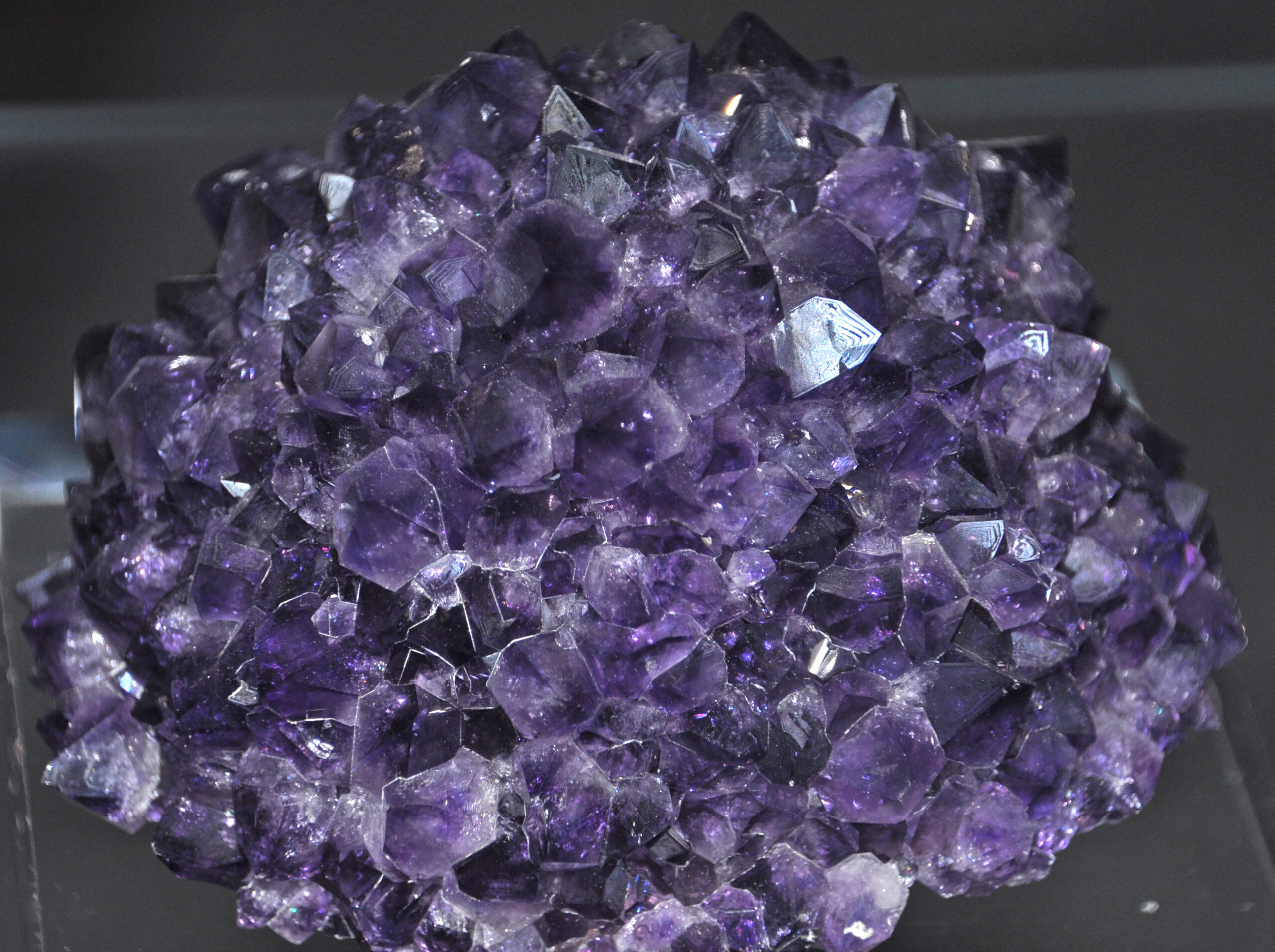
GIA identifies amethyst as the purple variety of quartz, with Mohs hardness 7. That gives a beginner a concrete first question: do you actually want a purple quartz object?
The featured image is a verified real amethyst specimen from Uruguay. It shows material appearance; it is not evidence that amethyst causes calm, sleep, protection, or any other outcome. Continue with the standalone Amethyst guide if this is your direction.
Rose quartz: if soft pink is the object you want
Rose quartz gives you a cloudy or translucent pink quartz example. GIA lists it at Mohs 7 and says warm, soapy water is a safe cleaning method; ultrasonic and steam cleaning should be avoided.
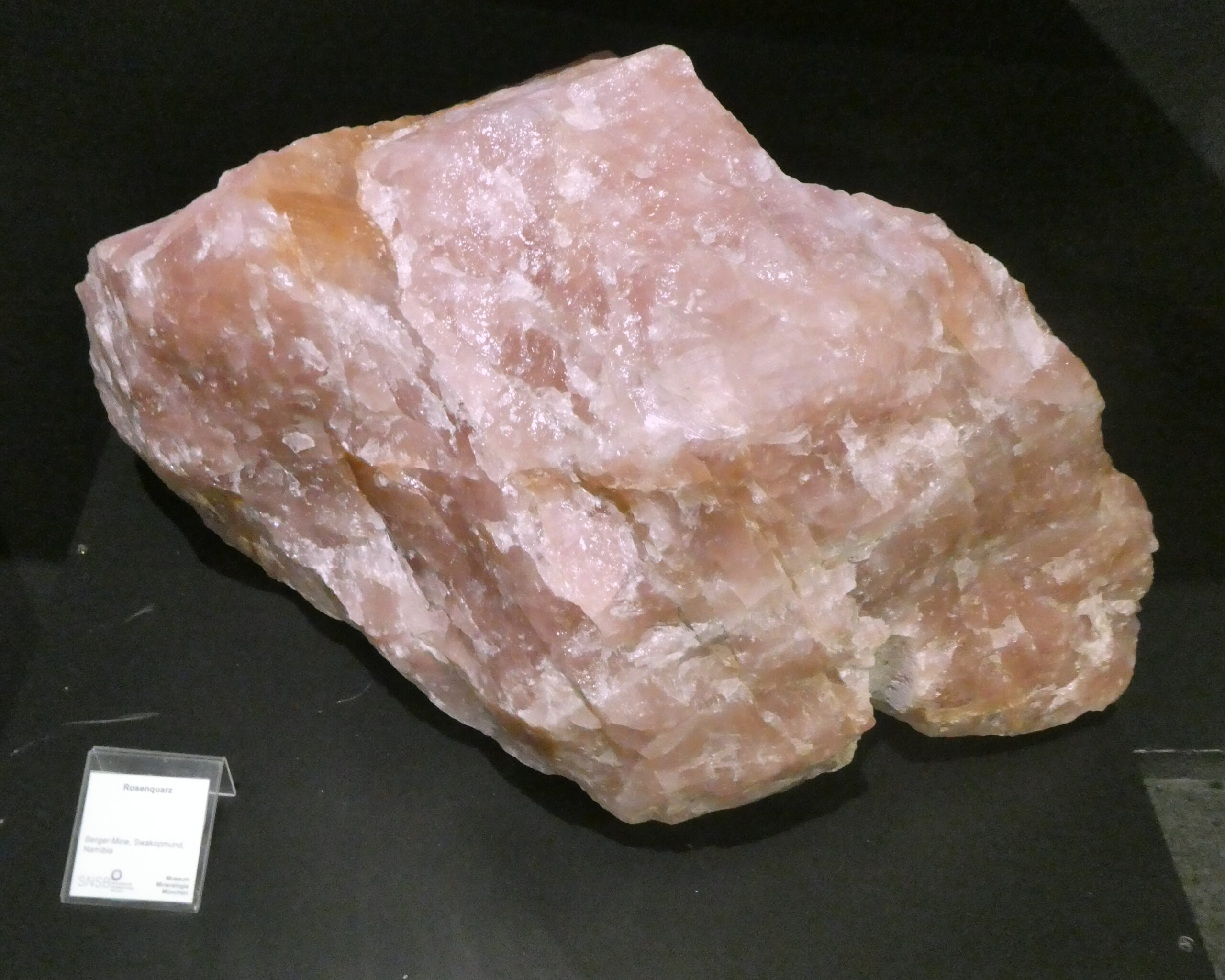
Pink color and care belong to the factual layer. Love, compassion, or self-care belong to a cultural or personal symbolism layer. You can use that symbolism without claiming the mineral changes relationships or health. See the Rose Quartz guide for the mineral itself.
Black tourmaline: if dark texture and contrast appeal to you
The verified Serenlith specimen below is dark and strongly textured, shown with quartz rather than as a polished pastel object.
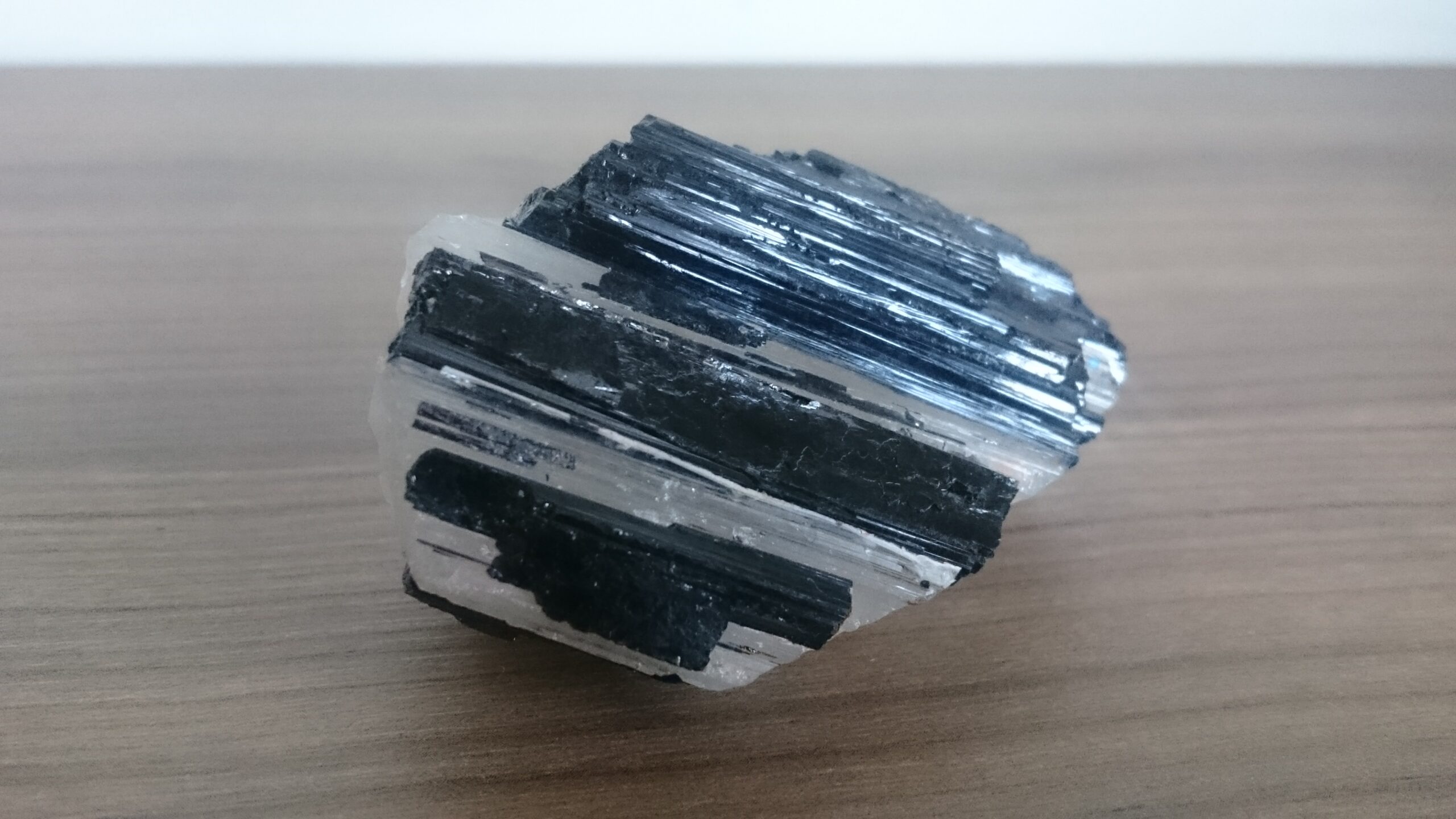
Modern crystal culture often uses protection or grounding language around black tourmaline. If that symbolism matters to you, keep it as a reminder or ritual cue—not proof that a stone blocks danger, electromagnetic fields, illness, or other physical harm. The Black Tourmaline guide owns the deeper identity and history context.
Citrine: if yellow quartz makes you curious about treatment
GIA describes citrine as yellow-to-orange quartz at Mohs 7 and notes a useful beginner boundary: natural citrine is rare, and much citrine in the market is heat-treated amethyst.
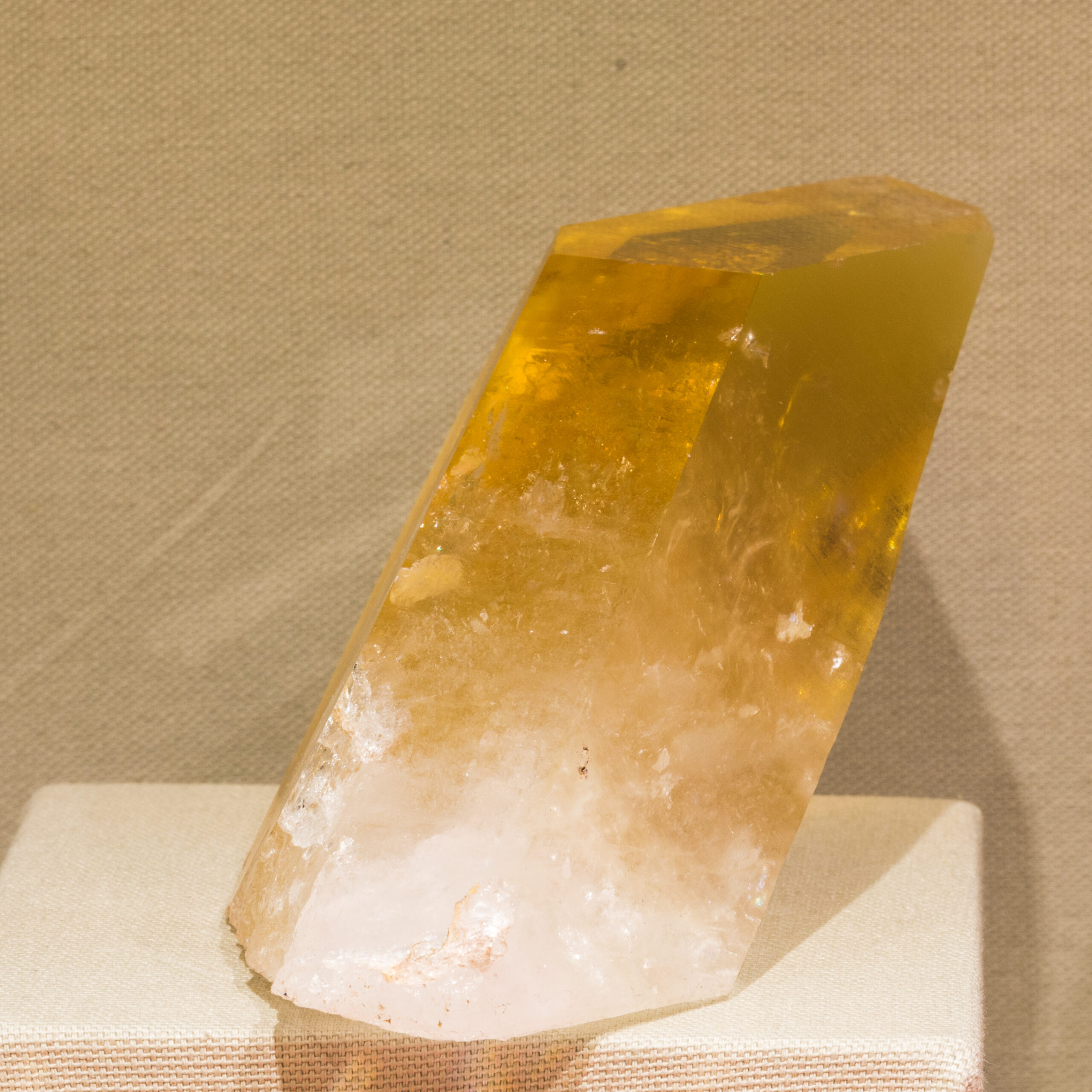
That is a better beginner lesson than “citrine is for abundance.” A seller name and attractive color are not a complete material description; treatment disclosure matters, and color alone does not certify a stone. Abundance or optimism can remain personal symbolism, not a promise of financial results. See the Citrine guide for the mineral story.
Care check: ask three things before you clean a crystal
“Crystals” is not one universal material category. Use a small care check instead of copying one cleaning method across a collection.
| Check | Why it matters |
|---|---|
| What is the mineral? | Care guidance belongs to the exact material, not the word “crystal.” |
| What is the whole object? | A loose specimen and a finished ring, bracelet, coated piece, or glued setting are different care situations. |
| What method is actually supported? | Water, heat, steam, ultrasonic cleaning, and strong light are not universal rules. |
GIA’s quartz examples show why the distinction matters. Amethyst is Mohs 7, but GIA cautions against abrupt temperature changes, steam cleaning, and prolonged intense light for some material. Rose quartz is also Mohs 7, while GIA advises avoiding ultrasonic and steam cleaning.
When evidence is incomplete, choose the gentler method and find material-specific guidance before experimenting.
Meaning is optional
You can own a crystal because you like geology, color, texture, jewelry, family tradition, design, or symbolism. None of those motives needs a supernatural or medical mechanism.
A useful boundary is simple:
- “This reminds me to pause” is not “this treats anxiety.”
- “I use this as a boundary reminder” is not “this blocks physical harm.”
- “I associate this with abundance” is not “this creates wealth.”
That keeps symbolism personal instead of borrowing the authority of geology, medicine, or engineering.
If symbolism does not matter to you, skip it. LOOK, PLACE, and CARE are already enough to choose a first crystal.
How many crystals should a beginner start with?
One. There is no material reason you need a fixed number of stones to begin.
A single specimen gives you a reference point: what you like visually, whether you prefer a loose mineral or finished jewelry, how much care you are comfortable with, and whether you actually enjoy having the object around.
Add another when you have a reason that is yours—a different mineral family, color, form, birthstone connection, or structure that interests you. That is a stronger collection rule than filling named slots in a starter set.
A five-point check before you choose
- Can I describe what I like about the object without using a promised effect?
- Do I know what mineral the seller or source says it is?
- Do I know whether it is a loose specimen or a finished object with additional materials?
- Can I find credible care or treatment information for the exact material?
- If symbolism matters, can I keep it as personal or cultural meaning rather than a medical, physical, or financial claim?
If most of those answers are yes, you know enough to start learning from one real piece.
The shortest answer
Choose the object before the promise. Look at the real color and form, decide where the piece will live, and check care for the exact mineral and whole object.
Add symbolism only if it is personally useful. You do not need a starter kit or a universally “best” stone. One well-understood crystal is enough to begin.
From here, open the guide for the mineral actually in front of you: Amethyst, Rose Quartz, Black Tourmaline, or Citrine.
Sources
- Gemological Institute of America — Amethyst
- Gemological Institute of America — Amethyst Care and Cleaning
- Gemological Institute of America — Rose Quartz Care and Cleaning
- Gemological Institute of America — Citrine
- Gemological Institute of America — Citrine Care and Cleaning
Featured image: Amethyst specimen from Uruguay, James St. John, CC BY 2.0, via Wikimedia Commons. Other specimen credits appear with their images.