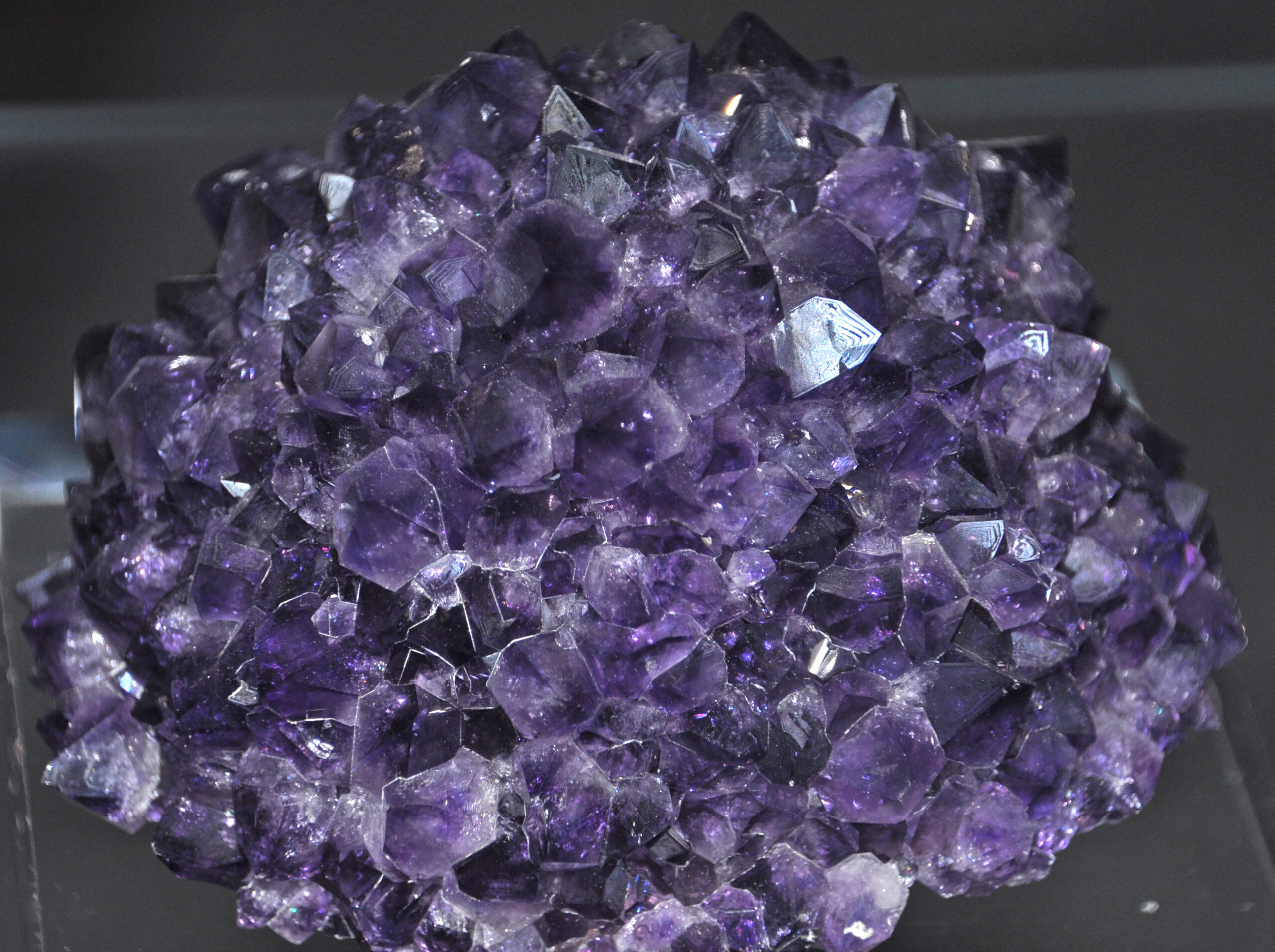
Amethyst and rose quartz can look like opposites: one violet and often transparent enough to show depth, the other usually soft pink with a cloudier glow. The useful surprise is that they start in the same mineral family. Both are varieties of quartz, and both rate 7 on the Mohs hardness scale.
So this is not a contest over which crystal is “stronger.” A better comparison asks four things: what is physically different, what does the exact object look like, does its care differ, and what symbolism—if any—do you want to add?
| Compare | Amethyst | Rose quartz |
|---|---|---|
| Mineral family | Quartz | Quartz |
| Typical color | Lilac to deep purple | Delicate pale-to-medium pink |
| Typical look | Transparent to translucent; color zoning can be visible | Often softer, cloudy or translucent |
| Mohs hardness | 7 | 7 |
| Care baseline | Warm soapy water; avoid steam; protect from intense light and abrupt temperature change | Warm soapy water; avoid ultrasonic and steam cleaners |
| Cultural shorthand | February birthstone; often used to symbolize calm or clarity | Often used to symbolize love, compassion or care |
The first five rows describe mineral, appearance, or care. The last row describes culture and personal symbolism. Keeping those evidence classes separate makes the choice much easier.
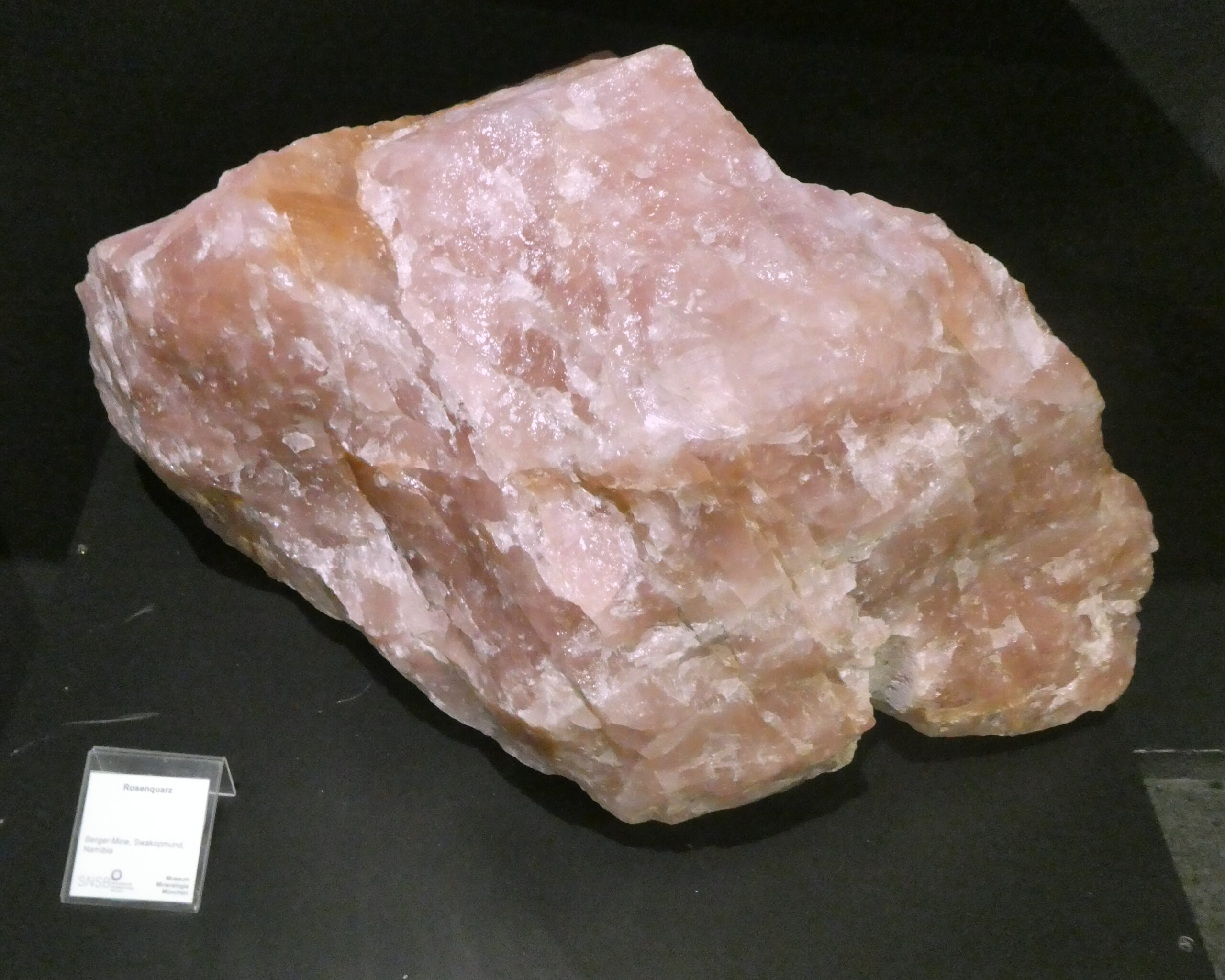
The featured amethyst image and this rose quartz image are real specimen references. They are useful because the comparison begins with actual material, not a generated purple-versus-pink illustration. They help with recognition; they do not certify an unknown stone you may own.
They are both quartz—but they do not look interchangeable
GIA identifies amethyst as the purple variety of quartz. Its color can range from light lilac to deep purple, and visible zones of lighter and darker purple are common enough to be a useful recognition cue.
Rose quartz is also quartz, but its visual signature is pink. GIA describes the gem by its delicate pink color, and much rose quartz presents a softer or cloudier translucent appearance than typical transparent amethyst material.
Those differences are helpful, but they are not identity tests. A purple object is not automatically natural amethyst, and a cloudy pink object is not automatically natural rose quartz. Color, clarity, lighting, cutting, treatments, synthetics, and imitations can complicate what a quick glance seems to show.
That is the right way to use appearance: know what to inspect, but do not pretend a photograph can certify the stone.
The visual difference is easier than the “better crystal” question
Under ordinary neutral light, amethyst often feels more defined because purple can sit in transparent or translucent material and show visible depth or zoning. Faceted material can look crisp because light travels through it readily.
Rose quartz usually feels softer. Its pink is often lighter, and the material may diffuse light rather than show the same transparent depth. In a polished piece or bead, the effect can be quieter and more even.
Neither visual character is better. If you want a violet accent with stronger optical depth, amethyst is the natural direction. If you want muted pink and a softer translucent presence, rose quartz is the more obvious fit.
Their care overlaps, but the cautions are not identical
Because both stones are quartz at Mohs 7, it is tempting to give them one universal care rule. GIA’s care guidance shows why that shortcut is too simple.
For amethyst, GIA says warm, soapy water is safe. It also warns that abrupt temperature changes can cause fracture, that some amethyst color can fade with prolonged exposure to intense light, and that steam cleaning is not recommended.
For rose quartz, GIA likewise says warm, soapy water is safe. It describes rose quartz as generally stable to light and heat, but advises avoiding ultrasonic and steam cleaners.
A practical comparison is therefore:
- Both: warm soapy water is a sensible baseline for the gemstone itself.
- Amethyst: take extra care around prolonged intense light and sudden temperature changes; avoid steam.
- Rose quartz: avoid ultrasonic and steam cleaning.
- Finished jewelry: check the whole object, because settings, cord, adhesive, coatings, or other gems can introduce their own limits.
Shared Mohs hardness does not make every bracelet, pendant, ring, or treated object interchangeable from a care perspective.
Symbolism belongs in a different column
Amethyst has a documented cultural identity as the February birthstone. Modern crystal culture also uses words such as calm, clarity, protection, or intuition around it.
Rose quartz is commonly used today as a symbol of love, compassion, tenderness, or care.
Those associations can be personally meaningful. They are not evidence that one quartz variety treats sleep, anxiety, grief, relationships, or any other health or psychological condition.
If symbolism matters, keep it modest and useful: amethyst might remind you to pause or honor a February connection; rose quartz might remind you to act with warmth or compassion. The meaning is in the use you choose for the object, not a hidden mechanism that makes one mineral “more powerful.”
Can you wear amethyst and rose quartz together?
Yes. There is no material rule saying the colors cannot share a piece or be worn side by side.
The practical question is simply the construction of the finished object. A mounted, drilled, glued, coated, or strung piece should be cared for as that complete object rather than as “quartz” in the abstract.
Visually, the pair can work well because purple gives a cooler, stronger anchor while soft pink lightens the composition. You can let one dominate or wear both because you like the contrast.
Which one should you choose? Use three questions
1. Which color and visual character do you actually want?
Choose amethyst if violet, purple depth, or visible color zoning is the attraction. Choose rose quartz if soft pink and a gentler translucent look are what you want to see.
2. What is the exact object you are choosing?
A loose specimen, faceted ring, polished stone, and strung bracelet are different objects even when the mineral name is the same. Look at the piece itself—its clarity, fractures, construction, treatment disclosure, and maker care instructions—not only the label.
3. Does symbolism earn a place in the decision?
If yes, choose the association that is useful to you. February or a clear-headedness reminder may pull you toward amethyst; love or compassion may pull you toward rose quartz. Keep those meanings in the cultural or personal layer rather than turning them into promises about what the quartz will do.
If symbolism does not matter, stop after color, form, and craftsmanship. That is a complete answer.
The shortest answer
Amethyst and rose quartz are both quartz and both Mohs 7. Amethyst is the purple variety and often shows more visible depth or color zoning; rose quartz is pink and often appears softer or cloudier.
Their care overlaps, but amethyst deserves extra caution around prolonged intense light and abrupt temperature change, while GIA advises avoiding ultrasonic and steam cleaning for rose quartz. Their popular meanings are cultural or personal symbolism, not proven effects.
Choose the real object first. Add symbolism only if it actually helps you choose.
For deeper context, see the standalone Amethyst guide and Rose Quartz guide.
Sources
- Gemological Institute of America — Amethyst
- Gemological Institute of America — Amethyst Description
- Gemological Institute of America — Amethyst Care and Cleaning
- Gemological Institute of America — Rose Quartz Care and Cleaning
- Gemological Institute of America — Rose Quartz Gem Encyclopedia
Featured image: Amethyst specimen from Uruguay, James St. John, CC BY 2.0, via Wikimedia Commons.