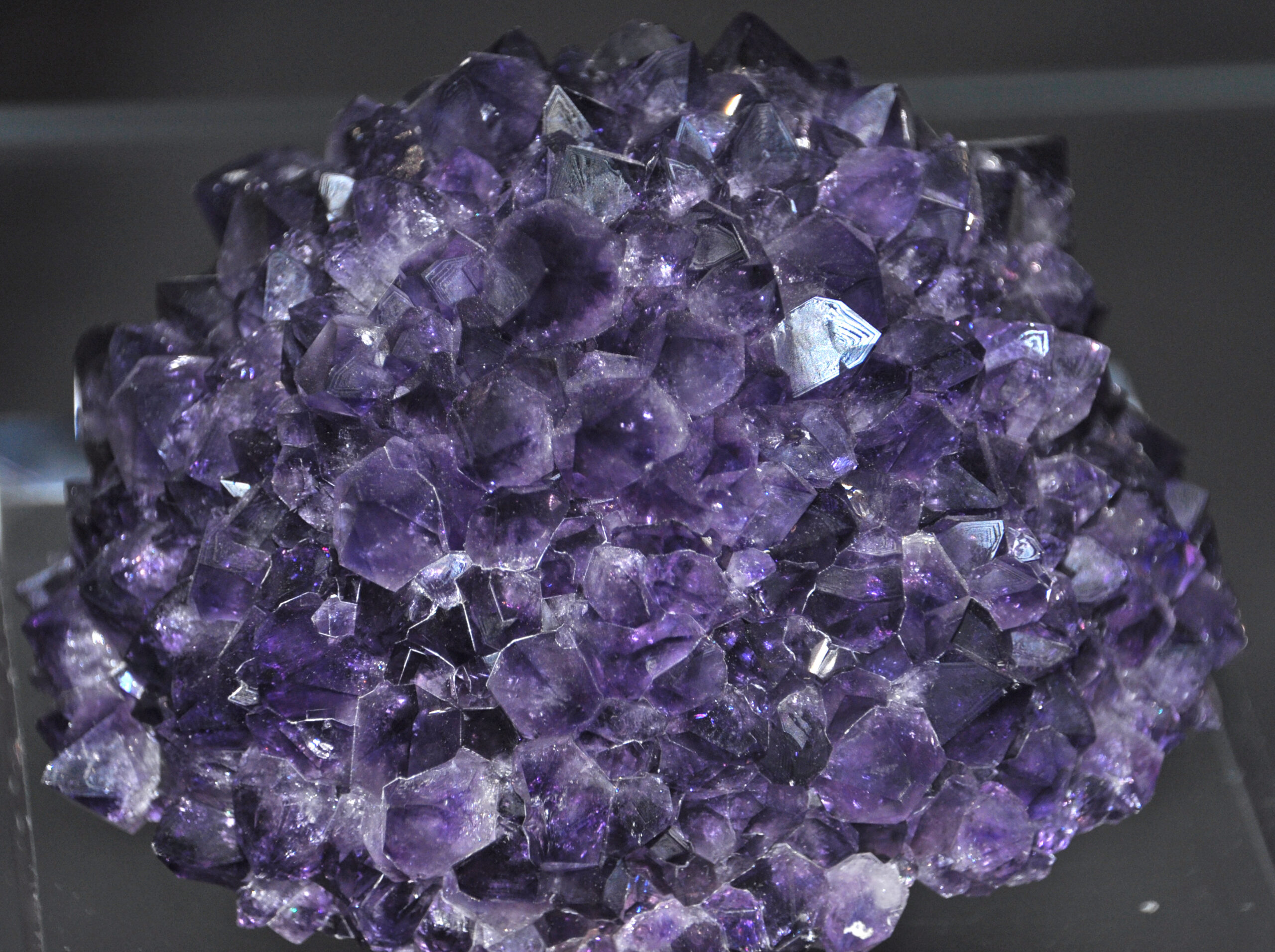
Yes. Amethyst can get wet, and warm soapy water is a standard way to clean it. If your ring, pendant, cluster, or loose stone was splashed, you do not need to race a countdown timer.
The useful distinction is simpler: water is for cleaning, not for testing how long the stone can endure a soak. Clean what needs cleaning, then stop when the job is done.
If your amethyst is wet right now
If it was only splashed or rinsed, dry it normally with a soft cloth and let it finish drying at room temperature.
If it is actually dirty, keep the routine gentle:
- Use warm soapy water.
- Loosen dirt with a soft brush where needed.
- For a mounted stone, brush gently around the back of the amethyst and the setting where residue can collect.
- Rinse and dry the piece without sudden changes from hot to cold.
That last point matters more than an internet stopwatch. Abrupt temperature changes can fracture amethyst, so steady, moderate temperatures are the safer habit.
Why Mohs 7 cannot tell you “how long”
Amethyst is the purple variety of quartz and rates 7 on the Mohs hardness scale. Mohs hardness is useful for understanding scratch resistance. It is not a universal score for heat, treatments, jewelry construction, or time in water.
That is where a common shortcut breaks down. “Mohs 7” does not turn into “safe for exactly 30 seconds,” “10 minutes,” or any other universal water limit.
For routine cleaning, the practical answer to “how long?” is: long enough to clean the stone gently, not long enough to turn cleaning into an endurance test. If ordinary warm soapy water and a soft brush are not solving the problem, making the water hotter, switching to steam, or scrubbing harder is not the next sensible step.
A ring is more than a piece of quartz
A loose amethyst is one material. An amethyst ring or pendant is a whole object.
Before cleaning jewelry, look at the setting as well as the stone. If a prong looks loose, the piece is visibly damaged, or the construction is unfamiliar, the condition of the jewelry becomes the limiting factor. A soft brush may be useful behind a securely mounted stone, but the amethyst’s hardness does not make every part of the piece indestructible.
For an ordinary piece in sound condition, keep the method simple. For a valuable, damaged, repaired, antique, or otherwise uncertain piece, stop before escalating the cleaning and have the actual object assessed.
Heat is a clearer warning than water
Steam cleaning is not recommended for amethyst, and high heat should be avoided. Sudden temperature changes can cause fracture. Some amethyst can also fade after prolonged exposure to intense light.
So after washing, let the piece dry at room temperature. A hair dryer, heater, or hot sunny windowsill does not improve a gentle cleaning routine.
The point is not to fear water. It is to pay attention to the variables that actually change the care decision: temperature, condition, and the whole object around the stone.
The rule to remember
If one line is worth keeping, make it this:
Clean it. Don’t test it.
Warm soapy water and a soft brush are enough for ordinary amethyst cleaning. Skip invented countdowns, keep temperatures steady, and let the condition of the whole piece decide when extra caution is needed.
For the separate story of why amethyst became associated with clarity and clear-headedness, see Serenlith’s Amethyst meaning and history guide.
References
- Gemological Institute of America — Amethyst Care and Cleaning Guide
- Gemological Institute of America — Amethyst: A Variety of Quartz
- International Gem Society — Gemstone Care Guide
- International Gem Society — How to Clean Your Gemstone Jewelry